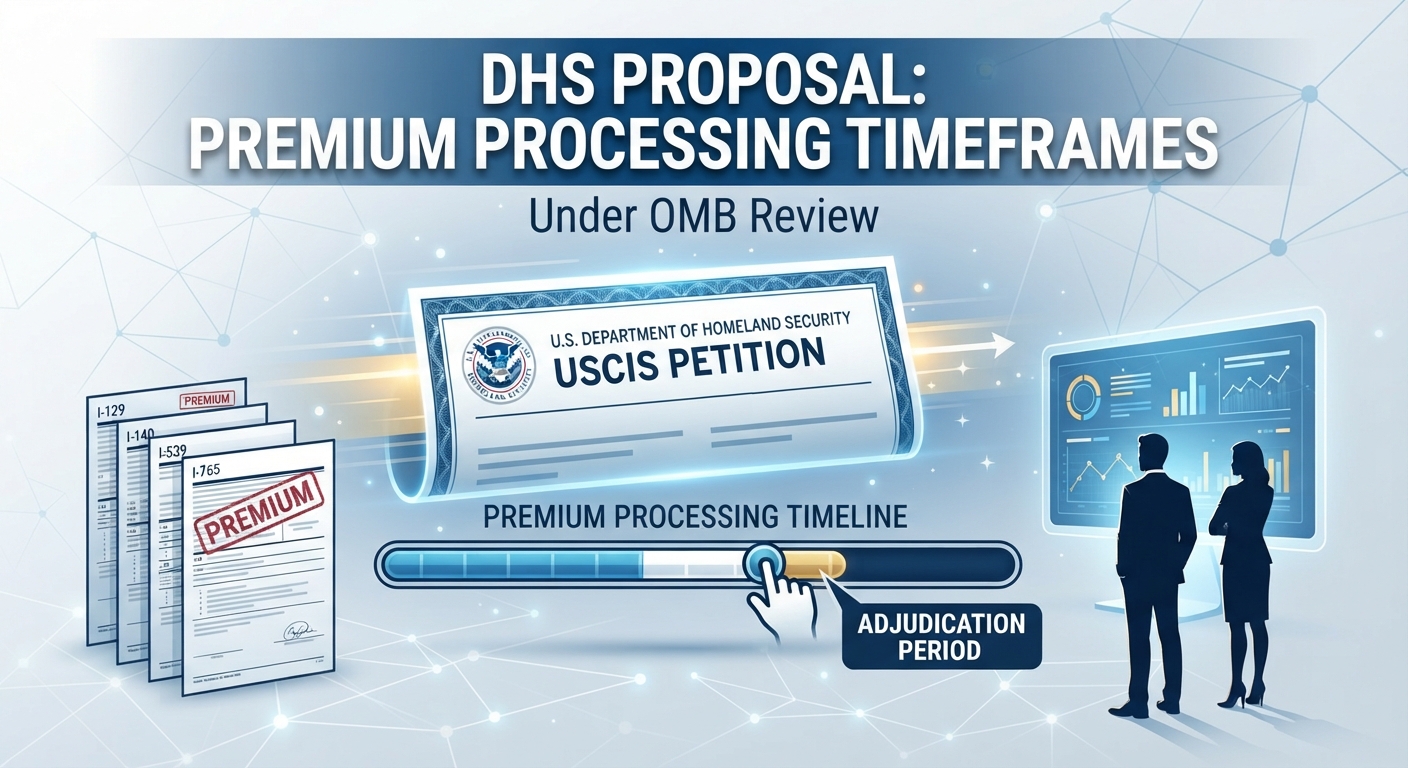
The Department of Homeland Security (DHS) has submitted a new proposed rule to the Office of Management and Budget (OMB) that could significantly impact USCIS premium processing timelines. While the exact text remains confidential during White House review, the proposed regulation—titled Amendments to Premium Processing Timeframes—signals potential shifts in how expedited immigration applications will be handled.
At Cohen, Tucker & Ades, we are closely monitoring this development to ensure our clients are prepared for any changes to their corporate immigration timelines. Below is a breakdown of what we know so far and what it means for your business or individual petition.
What is the new DHS premium processing proposal?
The DHS proposed rule seeks to amend the regulatory timeframes for USCIS premium processing. Currently under OMB review, the proposal is expected to alter the standard windows (such as 15, 30, or 45 business days) that USCIS takes to adjudicate expedited forms, potentially extending processing durations.
Current Status of the Proposed Rule
Because the rule is currently sitting with the OMB, no changes have gone into effect yet. The regulatory process will follow these steps before becoming law:
- OMB Clearance: The White House must review and approve the proposal.
- Notice of Proposed Rulemaking (NPRM): Once cleared, the rule will be published in the Federal Register.
- Public Comment Period: The public will have 30 to 60 days to submit feedback.
- Final Rule Publication: USCIS will review comments and publish a final version with an official effective date.
Current Premium Processing Fees and Timelines Remain in Effect
Until a final rule is published, the existing structure—which includes the inflation-adjusted fees that went into effect on March 1, 2026—remains active:
- Form I-129 (H-1B, L-1, O-1, TN): $2,965 for a 15-business-day response.
- Form I-140 (Employment-Based Green Cards): $2,965 for a 15-business-day response.
- Form I-539 (F-1, J-1, M-1 Change of Status): $2,075 for a 30-day response.
- Form I-765 (OPT/STEM OPT EADs): $1,780 for a 30-day response.
How Will This Impact Corporate Immigration Timelines?
If the rule lengthens the required response windows for USCIS officers, employers and foreign professionals should prepare for the following operational adjustments:
- Longer Onboarding Windows: HR teams may need to initiate H-1B transfers or L-1 intracompany petitions much earlier to account for extended gaps.
- Heightened Focus on RFE Timelines: If a Request for Evidence (RFE) is issued, a lengthened premium processing window could delay the final decision significantly longer than it does today.
- Strategic Filing Deadlines: Businesses will need to audit their upcoming visa expirations to file critical petitions before any potential final rule takes effect.
Frequently Asked Questions (FAQ)
- Will this proposal increase premium processing fees again? No, this specific proposed rule focuses on processing timeframes, not financial costs. USCIS already implemented a biennial inflation adjustment to premium processing fees earlier this year on March 1, 2026.
- When will the new premium processing timelines start? There is no set start date. The rule must complete OMB review, go through a mandatory public comment period, and be published as a final rule before taking effect. This process typically takes several months.
- Should I file my USCIS application now? If you have an upcoming visa renewal, change of status, or green card petition that requires expedited handling, we highly recommend filing as early as your regulatory window allows to secure the current, shorter processing timelines.
Stay Ahead of USCIS Policy Changes with Cohen, Tucker & Ades
Navigating sudden shifts in federal immigration policy requires proactive strategy. The legal team at Cohen, Tucker & Ades is tracking this proposed rule daily. If your organization relies on predictable USCIS timelines for international talent retention, contact our office today to audit your upcoming filings and safeguard your workforce pipeline.
About the Author
Wendy R. Barlow, Esq.is a Partner at Cohen, Tucker + Ades, P.C. with nearly 20 years of experience in high-stakes immigration litigation. A graduate of the Maurice A. Deane School of Law at Hofstra University, Wendy is admitted to practice in New York and New Jersey as well as before the U.S. Supreme Court and multiple Federal Circuit Courts. Wendy is recognized for her ability to handle cases that many consider insurmountable.
Disclaimer: This blog post contains general information and is for informational purposes only. It is not legal advice and does not create an attorney-client relationship between you and Cohen, Tucker + Ades P.C. Immigration laws and fee schedules are subject to frequent change. The information provided herein may not reflect the most current legal developments. You should not act or refrain from acting based on information contained in this post without seeking professional counsel from an attorney licensed in your jurisdiction. Cohen, Tucker + Ades P.C. expressly disclaims all liability in respect to actions taken or not taken based on any or all of the contents of this post.