Immigration Law Blog
Stay up-to-date on the latest immigration law news, with the Cohen, Tucker & Ades team's insights behind the headlines

Key Takeaway: U.S. Citizenship and Immigration Services (USCIS) has implemented an interim final rule changing how affirmative asylum applications are handled. Under this policy, USCIS can bypass the standard asylum officer interview and send select cases directly to Executive Office for Immigration Review (EOIR) immigration courts. If you have a pending asylum claim, understanding this procedural shift is vital to protecting your rights.
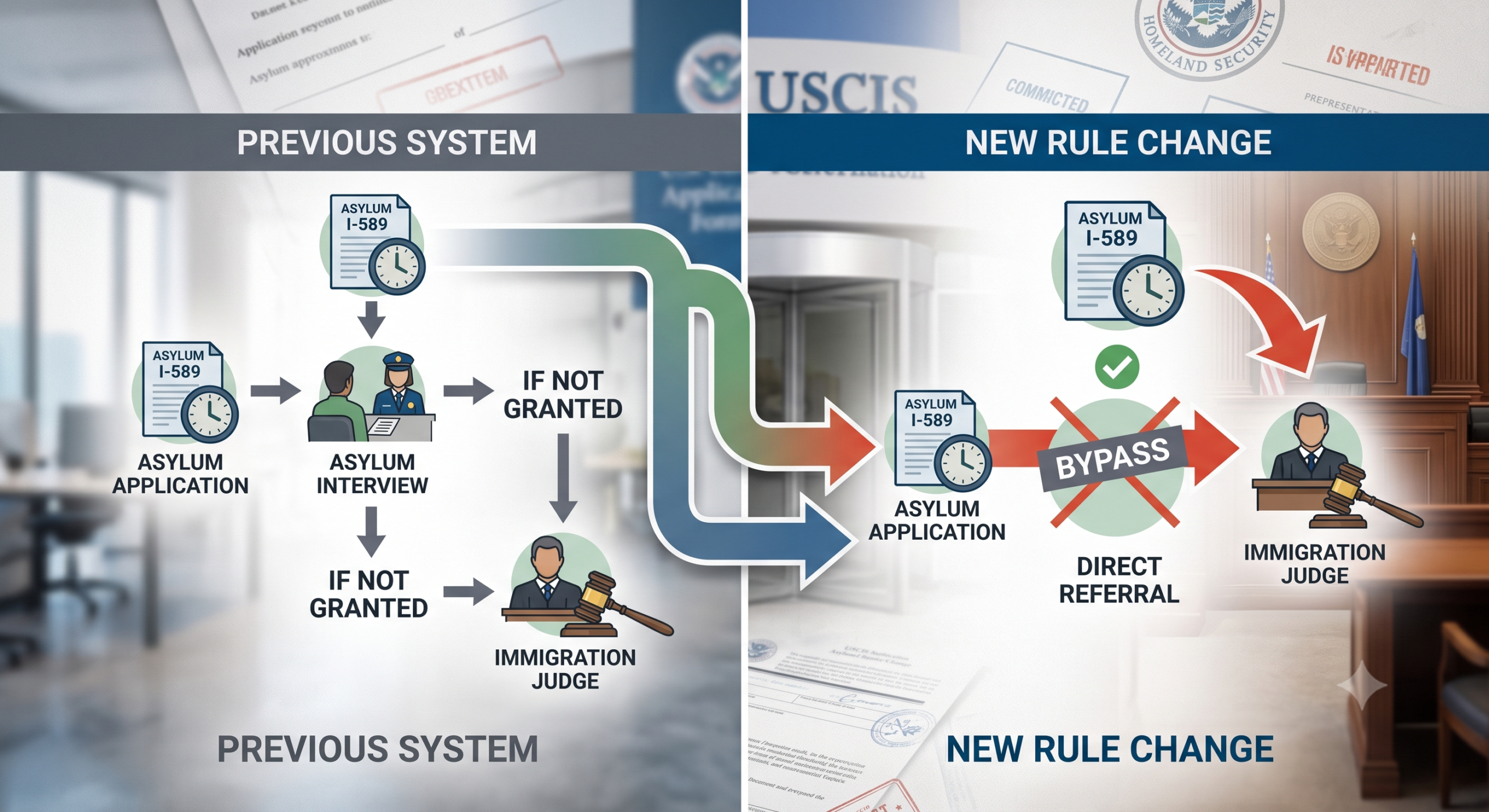
Traditionally, affirmative asylum applications—filed by individuals already in the United States who are not in active removal proceedings—follow a two-step administrative process:
USCIS Affirmative Interview: An applicant attends a non-adversarial interview before a USCIS Asylum Officer.
Immigration Court Referral: If USCIS does not grant asylum, the case is referred to an Executive Office for Immigration Review (EOIR) immigration judge for defensive proceedings.
Under the updated interim rule, USCIS now holds the authority to bypass the Asylum Officer interview entirely for designated cases and transfer them straight to Immigration Court.
TRADITIONAL PATH
[Application Filed] ──> [USCIS Asylum Officer Interview] ──> [If Not Approved: Referred to Court]

NEW DIRECT PATHWAY
[Application Filed] ──> [USCIS Screening] ──> [Direct Referral to Immigration Judge]
According to statements from the Department of Homeland Security (DHS) and USCIS leadership, the rule aims to address an active asylum backlog exceeding 1.5 million pending applications by eliminating duplicate administrative reviews.
Key reasons cited for the rule include:
Shortening Overall Adjudication Timelines: By reducing the dual-layer evaluation process between USCIS and DOJ immigration courts.
Deterring Non-Viable Claims: Accelerating decision timelines for applications filed primarily to delay removal or maintain long-term work authorization (EADs).
Reallocating Officer Resources: Allowing asylum officers to concentrate interviewing resources on cases requiring localized evaluation.
A direct referral to immigration court alters the structure and atmosphere of your legal proceedings:
An interview before a USCIS Asylum Officer takes place in an office setting designed to evaluate persecution claims in a non-adversarial manner. In contrast, an EOIR immigration court proceeding involves a formal courtroom setting. A Department of Homeland Security trial attorney will act as opposing counsel, and strict court evidentiary rules apply.
A direct court referral initiates formal removal (deportation) proceedings. While this does not mean your application is denied, it moves your case into an environment where an immigration judge makes the final determination on your eligibility for asylum, Withholding of Removal, or protection under the Convention Against Torture (CAT).
Work authorization eligibility for asylum applicants is tied closely to active pending times and compliance with court schedules. Moving directly into EOIR proceedings requires careful monitoring to ensure filing deadlines are met so employment eligibility remains uninterrupted.
Because a direct referral moves an application straight into court, preparation must begin long before a master calendar hearing is scheduled.
Maintain an Updated Address: Ensure USCIS and EOIR have your current mailing address. Missing a court notice (Form I-862, Notice to Appear) can result in an in absentia deportation order.
Consolidate Evidence Early: Gather all personal declarations, country conditions reports, medical records, and witness statements immediately rather than waiting for an interview notice.
Work with Experienced Legal Counsel: Navigating an EOIR courtroom proceeding requires a legal defense strategy tailored to immigration court rules and statutory standards.
No. A referral shifts the jurisdiction of your claim from USCIS to the EOIR immigration court. An immigration judge will evaluate your case de novo (from the beginning) and make an independent decision.
No. USCIS retains discretion on which cases receive direct court referrals versus those scheduled for standard asylum officer interviews. Factors influencing this decision may include filing dates, vetting results, and administrative priorities.
If you receive an NTA, your case has been formally placed in immigration court proceedings. Contact an experienced deportation defense attorney immediately to review court filing deadlines and prepare for your initial Master Calendar Hearing.
Since 1964, Cohen, Tucker + Ades, P.C. has helped individuals navigate changing U.S. immigration laws. If you have a pending affirmative asylum claim or are concerned about how this new USCIS rule impacts your status, our New York immigration defense team is ready to assist.
Contact Cohen, Tucker + Ades, P.C. today at (212) 840-0050 or visit cohentuckerlaw.com to schedule a consultation with our immigration attorneys.