Immigration Law Blog
Stay up-to-date on the latest immigration law news, with the Cohen, Tucker & Ades team's insights behind the headlines

Key Takeaway: The Financial Times piece “RIP the U.S. State Department” (July 14, 2026) outlines a 20%+ reduction in Foreign Service personnel and widespread diplomatic vacancies. For nonimmigrant visa applicants, immigrant visa applicants in consular processing, and U.S. employers, this institutional shift creates three immediate challenges:
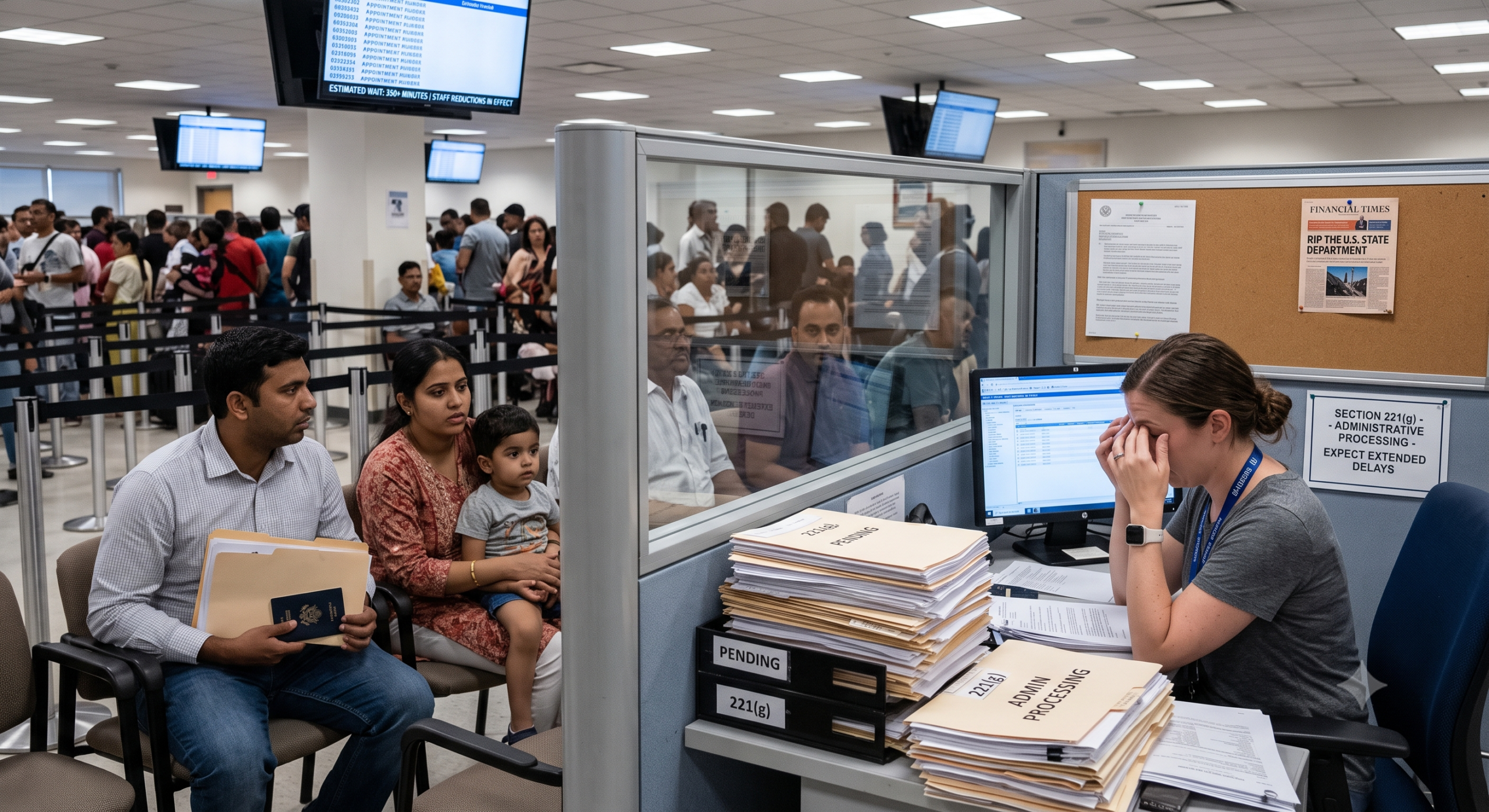
Extended Interview Wait Times: Fewer consular officers mean longer queues for H-1B, L-1, O-1, and B1/B2 visas.
Increased Section 221(g) Refusals: Overburdened adjudicators default to administrative processing delays rather than immediate approvals.
Unpredictable Global Mobility: Work-authorized foreign nationals face higher risks when traveling internationally for visa stamping.
A striking headline in the Financial Times captured the attention of immigration attorneys, international employers, and foreign families: “RIP the U.S. State Department.”
The article documents what many seasoned foreign service officers call an unprecedented institutional crisis: over 3,000 staff members reduced (more than 20% of the diplomatic workforce) and dozens of U.S. embassies operating without confirmed leadership.
While policy analysts focus on geopolitics, our team at Cohen, Tucker + Ades is evaluating the ground-level reality for our clients: What does an understaffed Department of State mean for U.S. visa processing and global talent mobility?
Here is a breakdown of how these staffing shifts directly affect your application—and what you can do to avoid costly delays.
Consular posts across Europe, Asia, and Latin America were already balancing significant post-pandemic backlogs. Removing a fifth of the global workforce compounds these bottlenecks.
With fewer adjudicating officers on the ground, appointment availability for work visas (H-1B, L-1, O-1), visitor visas (B1/B2), and student visas (F-1) is stretching further out. Routine appointments are also increasingly subject to sudden administrative rescheduling.
When consular posts lose institutional memory and veteran adjudicators, less experienced or overburdened officers tend to take a conservative approach.
Instead of issuing a clear approval, officers frequently issue Section 221(g) administrative processing notices to buy time for additional document reviews or background checks. This leaves applicants stuck in limbo for weeks or months.
Career Foreign Service Officers undergo extensive training in the Immigration and Nationality Act (INA). As staffing shifts toward temporary personnel or short-term assignees, applicants face:
Inconsistent interpretations of visa qualification requirements.
Arbitrary requests for duplicate documentation.
A higher need for formal legal intervention to correct administrative errors.
U.S. businesses relying on foreign talent face growing operational uncertainty. Key executives and specialized employees who travel abroad to renew their physical visa stamps risk getting stuck overseas if their consular interview is delayed or placed into administrative processing.
If you have upcoming travel plans or a pending consular application, follow these risk-mitigation strategies:
| Action Item | Recommended Strategy | Why It Matters |
| 1. Re-evaluate Travel | Limit non-essential travel if you require a physical visa stamp to re-enter the U.S. | Avoids getting stranded abroad due to unexpected appointment cancellations. |
| 2. Plan Months in Advance | Initiate consular scheduling 6 to 12 months before planned travel or employment start dates. | Provides a buffer against long scheduling queues and 221(g) hold times. |
| 3. Check Waiver Eligibility | Determine if you qualify for an Interview Waiver (Dropbox) in your home country. | Allows you to bypass the in-person interview queue entirely when eligible. |
| 4. Prepare Front-Loaded Files | Submit decision-ready applications with zero ambiguity on day one. | Overworked officers make fast decisions; complete files prevent follow-up RFEs. |
| 5. Leverage Legal Escalation | Work with experienced counsel to engage the National Visa Center (NVC) or Consular Chiefs. | Formal channels can help resolve unreasonable administrative delays. |
Published in July 2026, the Financial Times article analyzes structural workforce reductions exceeding 20% across the U.S. Department of State, highlighting the impact of diplomatic vacancies and staffing shortages on global operations.
Visa interview wait times are driven by a combination of elevated global demand and significant staffing shortages at U.S. embassies and consulates worldwide, leaving fewer officers to conduct daily interviews.
If you receive a Section 221(g) refusal, review the specific notice carefully, gather all requested documents immediately, and consult an immigration attorney to ensure your response meets consular standards.
While systemic shifts at the State Department create administrative hurdles, your visa application does not have to fall through the cracks. For decades, Cohen, Tucker + Ades has helped employers, foreign professionals, and families successfully navigate complex consular processing and U.S. immigration requirements.
Planning an upcoming visa application or international business trip?
Contact the legal team at Cohen, Tucker + Ades today to ensure your file is structured for an efficient approval.
Sources:
Financial Times, RIP the U.S. State Department (July 14, 2026)