By Wendy R. Barlow, Esq. | Partner at Cohen, Tucker + Ades Specializing in Complex Immigration Matters
Key Takeaways
-
The Proposal: DHS has submitted proposed rules aimed at eliminating the discretionary 60-day grace period following employment termination and ending employment authorization for H-4 dependent spouses.
-
Current Status: These regulations are proposals under federal review. They are not immediate law, and current grace period and H-4 EAD rules remain in effect today.
-
Action Required: Affected visa holders and employers should begin analyzing alternative visa categories and status maintenance options now to protect against sudden regulatory shifts.
What are the proposed DHS immigration changes for H-1B and H-4 holders?
The Department of Homeland Security (DHS) submitted regulatory actions targeting two critical provisions for high-skilled nonimmigrants:
-
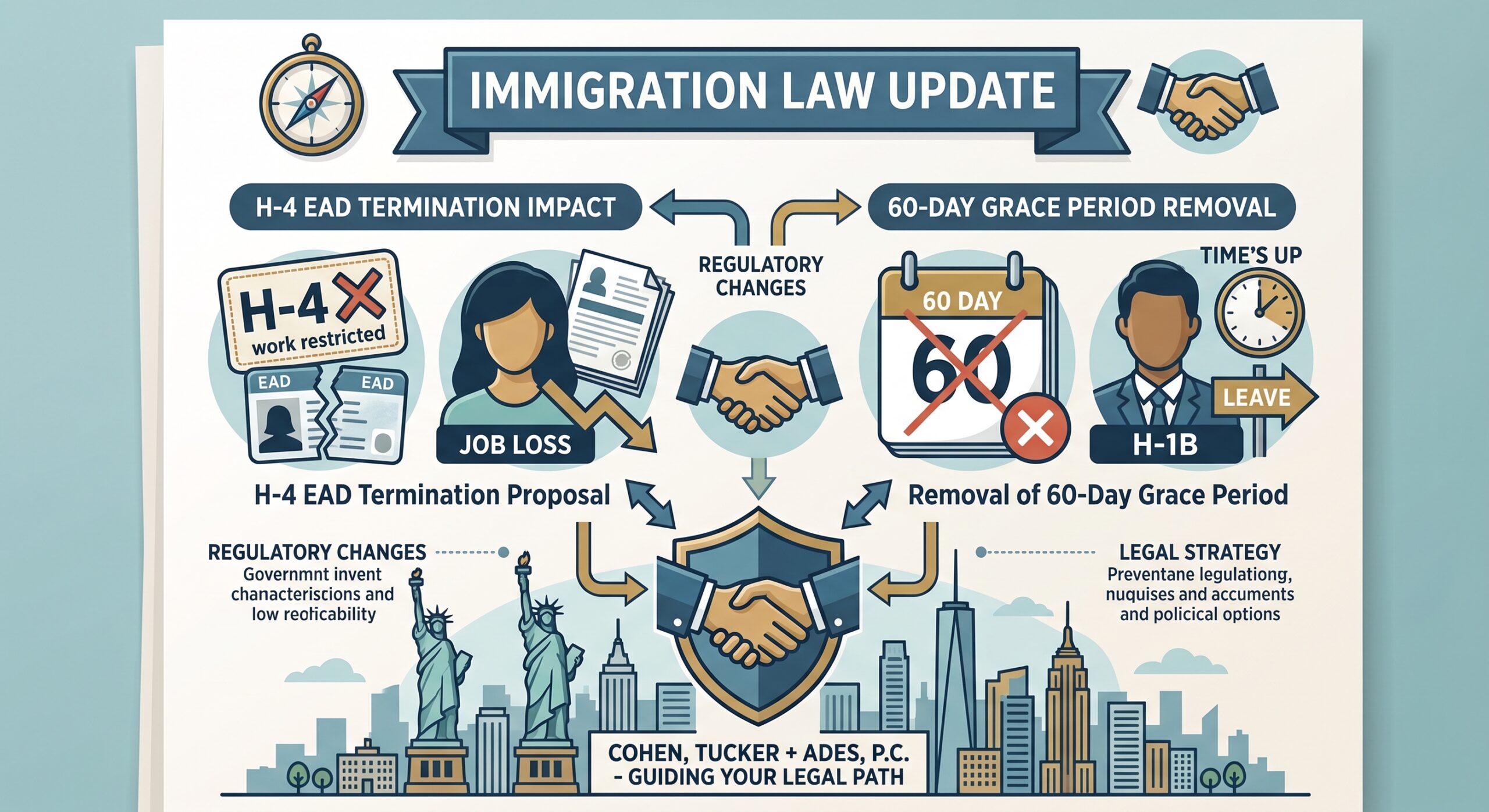
Elimination of the 60-Day Nonimmigrant Grace Period: Currently, when an H-1B, L-1, O-1, or TN worker experiences job termination, they receive up to 60 days (or until their I-94 expiration, whichever is shorter) to find a new employer sponsor, apply for a status change, or prepare to depart. The proposed rule seeks to remove this safety buffer.
-
Termination of the H-4 Employment Authorization Document (EAD): First introduced under the Obama administration, the H-4 EAD allows spouses of H-1B visa holders undergoing green card processing to work legally in the U.S. Current policy proposals aim to rescind this work authorization program.
How will removing the 60-day grace period affect H-1B visa holders?
Without a 60-day grace period, nonimmigrant workers who experience a job termination would fall out of legal status immediately upon their separation date.
This loss of a transition window creates significant structural challenges:
-
Immediate Unlawful Presence: Lacking a grace period, staying in the country past your final day of work could initiate the accrual of unlawful presence.
-
Truncated Job Searches: Workers would no longer have time to secure a new H-1B change-of-employer petition while remaining in the U.S.
-
Dependents Impacted: Spouses and children on H-4 status linked to the principal H-1B holder would face immediate status jeopardy.
What is the timeline for these proposed immigration changes?
Regulatory updates undergo a strict administrative rule-making process:
| Stage |
Status |
What Happens Next |
| OMB/OIRA Review |
Cleared / Pending |
Office of Information and Regulatory Affairs reviews the rule’s economic and policy impact. |
| Federal Register Publication |
Pending |
The proposed text is published, triggering a public comment period (usually 30 to 60 days). |
| Final Rule & Effective Date |
Future |
DHS reviews comments, formulates the final rule, and sets an enforcement date (typically months later). |
Important Note: Existing regulations remain active today. H-4 spouses with valid EADs can continue working, and eligible workers who face job separation can still utilize the current 60-day grace period while rule-making continues.
What visa alternatives should H-1B and H-4 holders consider?
Waiting for final regulatory announcements can leave nonimmigrant workers in a vulnerable position. Evaluating backup immigration pathways early allows families and employers to maintain lawful status regardless of administrative shifts:
Protect Your Status: Schedule an Alternative Options Assessment with Cohen, Tucker + Ades
Navigating changes in U.S. immigration policy requires proactive strategy, not quick reactions after a policy goes into effect. For over 60 years, Cohen, Tucker + Ades, P.C. has helped corporations, international professionals, and families safeguard their status through changing regulatory landscapes.
If you or your employees rely on an H-1B visa or H-4 EAD, do not wait until a rule becomes final to explore your options. Contact our NYC immigration legal team today to discuss immigration alternatives, structure contingency plans, and protect your long-term career in the United States.