Immigration Law Blog
Stay up-to-date on the latest immigration law news, with the Cohen, Tucker & Ades team's insights behind the headlines

In the landmark decision Trump v. Barbara (June 30, 2026), the U.S. Supreme Court reaffirmed more than 125 years of established constitutional precedent. Chief Justice John Roberts explicitly noted that under the 14th Amendment, individuals born on U.S. soil are citizens at birth—regardless of their parents’ immigration status—with narrow exceptions strictly limited to children of foreign diplomats or occupying enemy forces.
Rather than respecting judicial oversight, the administration responded on August 6, 2026, by issuing twin presidential actions. These orders instruct federal agencies to restrict document recognition and visa processing in an effort to accomplish administratively what the Supreme Court rejected constitutionally.
At Cohen, Tucker & Ades, P.C., where our team has advocated for immigrant rights since 1964, we believe this administrative maneuvering undermines fundamental constitutional protections.
The Citizenship Executive Order instructs federal administrative bodies to refuse citizenship recognition to children born in the United States if neither parent is a U.S. citizen or lawful permanent resident under designated conditions:
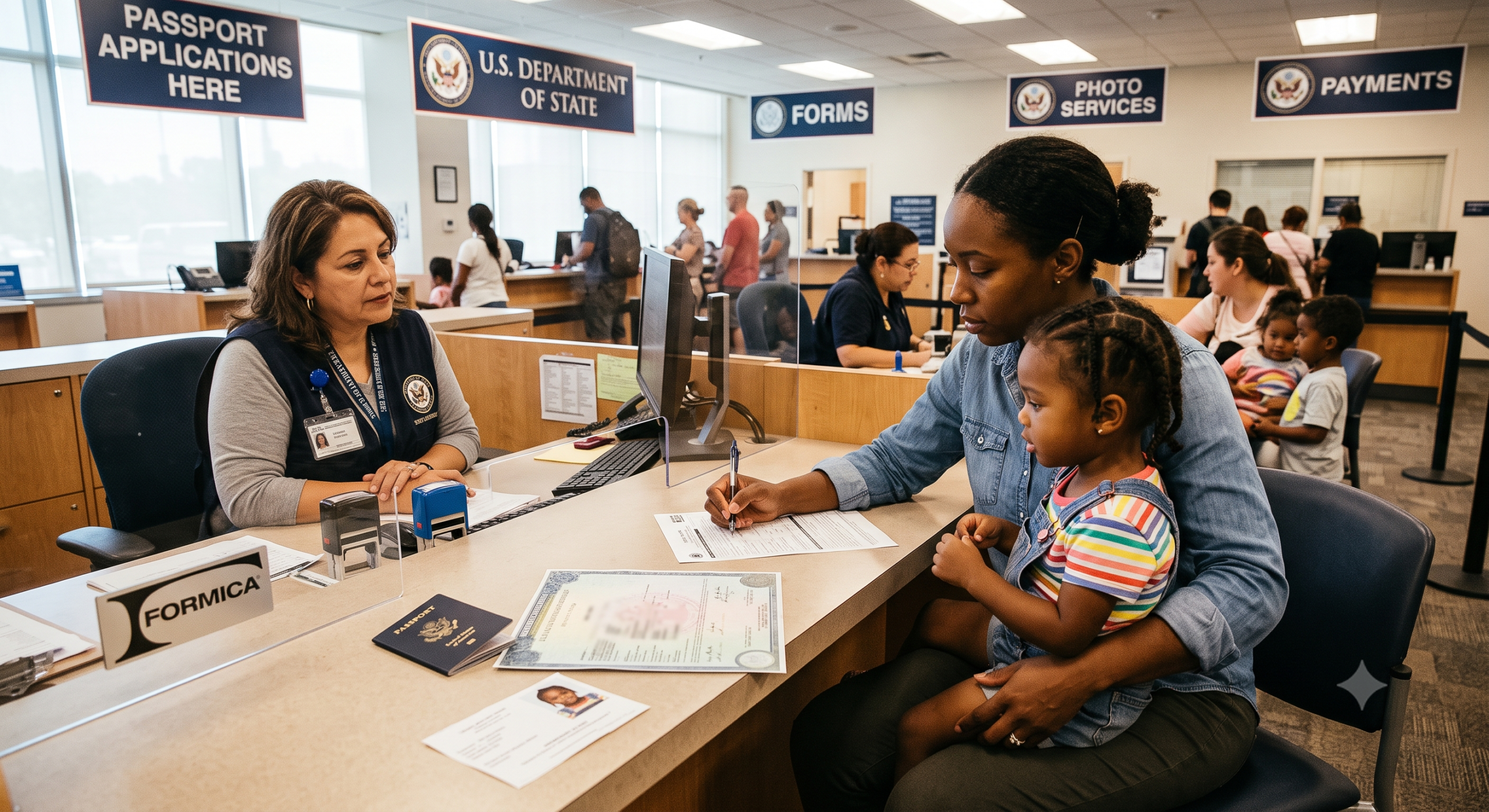
Denial of Documentation: Directs agencies not to issue or recognize U.S. passports, Social Security cards, or Consular Reports of Birth Abroad for children born to non-citizen parents falling within targeted nonimmigrant or undocumented categories.
Reinterpretation of Jurisdiction: Attempts to redefine the 14th Amendment’s requirement that a person be “subject to the jurisdiction thereof” at birth, artificially narrowing a standard settled by the Supreme Court over a century ago.
Restrictions on Territories and Surrogacy: Extends prohibitions to certain birth tourism practices, commercial surrogacy arrangements, and births occurring within specific U.S. territorial waters or jurisdictions.
The Birth Tourism Executive Order directs the Department of Homeland Security and Department of State to enact regulations restricting visa issuance and port-of-entry admissions. It targets foreign nationals suspected of traveling to the United States primarily to give birth, imposing strict scrutiny on B-1/B-2 visitor visa applicants.
The executive branch lacks the authority to modify the United States Constitution through executive orders or administrative memos.
       CONSTITUTIONAL HIERARCHY OF LAW
┌───────────────────────────────────────────────┐
│     U.S. CONSTITUTION (14th Amendment)         │  <-- Supreme Law of the Land
└───────────────────────┬───────────────────────┘
                        │ Overrides
┌───────────────────────▼───────────────────────┐
│     SUPREME COURT RULING (Wong Kim Ark)       │  <-- Settled Precedent
└───────────────────────┬───────────────────────┘
                        │ Cannot Be Broken By
┌───────────────────────▼───────────────────────┐
│      EXECUTIVE ORDERS / AGENCY DIRECTIVES     │  <-- Unconstitutional Overreach
└───────────────────────────────────────────────┘
Section 1 of the Fourteenth Amendment establishes:
“All persons born or naturalized in the United States, and subject to the jurisdiction thereof, are citizens of the United States and of the State wherein they reside.”
In United States v. Wong Kim Ark (1898) and reaffirmed in Trump v. Barbara (2026), the Supreme Court confirmed that “subject to the jurisdiction thereof” applies to anyone present on U.S. soil and subject to U.S. laws.
An executive order cannot narrow a constitutional right that the Supreme Court has explicitly upheld. Attempting to instruct federal agencies to withhold identity documents creates an administrative friction point designed to restrict rights that the courts have affirmed.
Federal courts will face swift challenges under the Administrative Procedure Act (APA) and the Fifth Amendment’s Due Process Clause. Preliminary injunctions are expected to block enforcement while judicial review takes place.
If you are currently in the United States under a temporary nonimmigrant visa (such as H-1B, L-1, F-1, or B-1/B-2) or awaiting adjustment of status, consider these key considerations:
State Birth Certificates Remain Valid: Vital statistics departments are governed by state law. State-issued birth certificates remain authoritative proof of birth within the United States.
Potential Federal Agency Delays: Expect temporary processing delays or confusion at federal passport agencies and Social Security field offices as agencies interpret new federal rules.
Proactive Legal Counsel: If federal identity documents are delayed or denied based on executive guidance, formal legal intervention may be required.
Yes. On June 30, 2026, the U.S. Supreme Court decided Trump v. Barbara, holding that children born in the United States acquire U.S. citizenship at birth under the 14th Amendment regardless of their parents’ immigration status.
No. Under the U.S. Constitution’s separation of powers, executive orders cannot nullify Supreme Court rulings or statutory guarantees. The administration cannot alter constitutional rules without a constitutional amendment.
The order instructs consular officers to apply heightened scrutiny to foreign nationals applying for visitor visas if there is reason to believe the travel is primarily for giving birth in the U.S. However, legitimate travel for medical treatment or tourism remains permissible under federal guidelines when properly documented.
At Cohen, Tucker & Ades, P.C., our attorneys bring over 60 years of dedicated legal experience to navigate shifting immigration policies. We actively track executive actions and represent clients to protect their constitutional rights.
If you have questions regarding how these new executive actions impact your family or immigration status, schedule a consultation with Cohen, Tucker & Ades, P.C. today.
Wendy R. Barlow, Esq. is a Partner at Cohen, Tucker + Ades, P.C. with nearly 20 years of experience in high-stakes immigration litigation. A graduate of the Maurice A. Deane School of Law at Hofstra University, Wendy is admitted to practice in New York and New Jersey as well as before the U.S. Supreme Court and multiple Federal Circuit Courts. Wendy is recognized for her ability to handle cases that many consider insurmountable.
Need assistance with an Asylum Cooperation Agreement case? Click here to schedule a consultation with Wendy.
Disclaimer: This blog post contains general information and is for informational purposes only. It is not legal advice and does not create an attorney-client relationship between you and Cohen, Tucker + Ades P.C. Immigration laws and fee schedules are subject to frequent change. The information provided herein may not reflect the most current legal developments. You should not act or refrain from acting based on information contained in this post without seeking professional counsel from an attorney licensed in your jurisdiction. Cohen, Tucker + Ades P.C. expressly disclaims all liability in respect to actions taken or not taken based on any or all of the contents of this post.