August 10, 2026

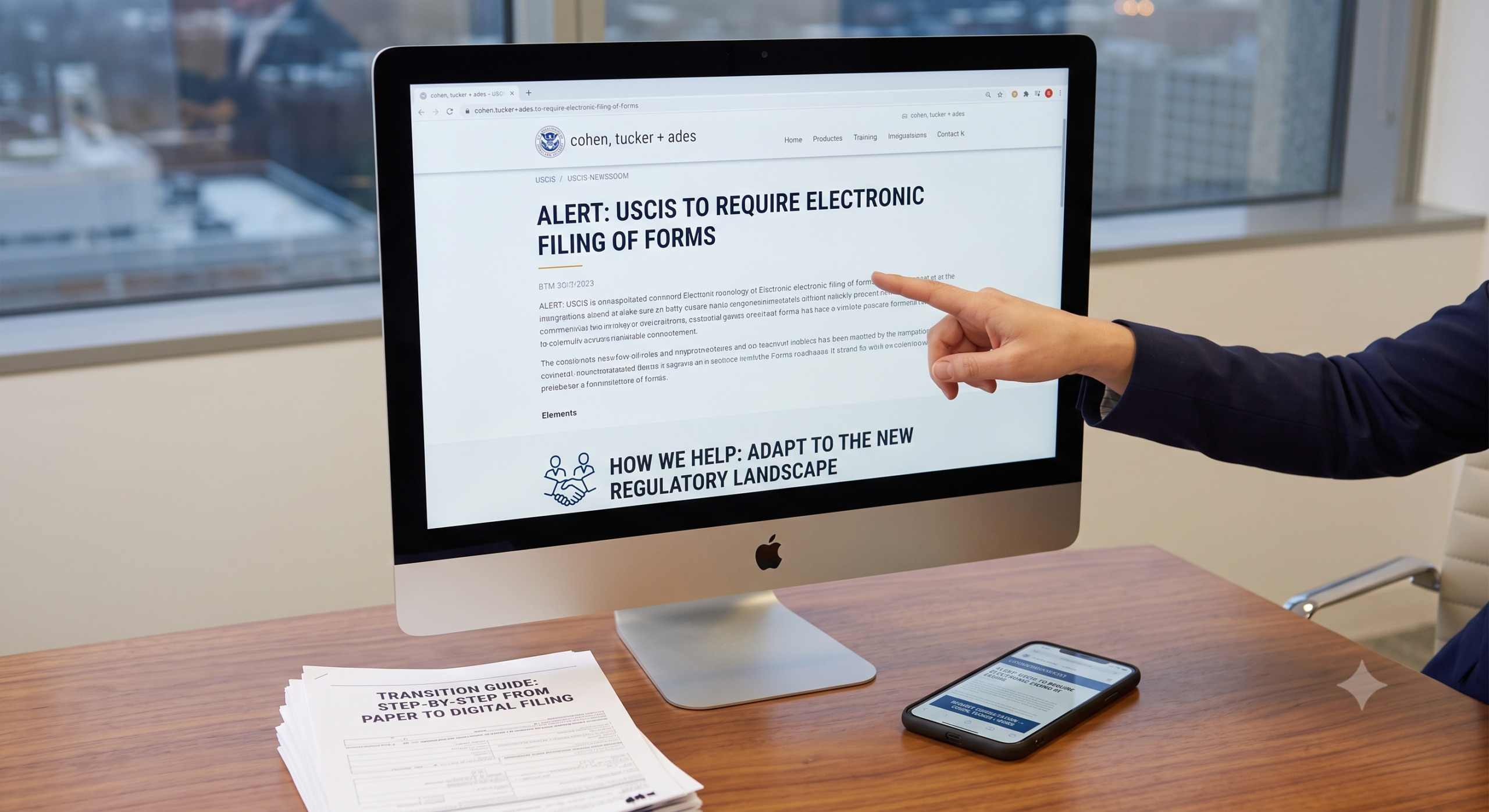
USCIS Mandates Electronic Filing: What Applicants and Employers Need to Know

By Wendy R. Barlow, Esq. | Partner at Cohen, Tucker + Ades Specializing in Complex Immigration Matters

Executive Summary (TL;DR)

  • What happened? DHS issued an Interim Final Rule granting USCIS authority to mandate electronic filing (e-filing) for eligible immigration forms.
  • When does it take effect? The rule is effective August 11, 2026. USCIS will provide 60 days’ public notice before making e-filing mandatory for any specific form.
  • Which forms are affected? Any form that has had an online filing option available for at least 180 days can be transitioned to mandatory e-filing.
  • What if I can’t file online? Paper filings will only be accepted if USCIS approves a discretionary undue hardship waiver.

What Is the New USCIS Mandatory Electronic Filing Rule?

On August 10, 2026, the Department of Homeland Security (DHS) published an Interim Final Rule (IFR) authorizing U.S. Citizenship and Immigration Services (USCIS) to enforce mandatory e-filing across eligible immigration benefit forms.
Under this framework, USCIS can require applicants, petitioners, and legal representatives to file electronically for any form that has already been available for online filing for at least 180 days.
┌─────────────────────────────────────────────────────────┐
│              Mandatory E-Filing Timeline                │
├──────────────────────┬──────────────────────────────────┤
│ Rule Effective Date  │ August 11, 2026                  │
├──────────────────────┼──────────────────────────────────┤
│ Advance Public Notice│ 60 days before form requirement  │
├──────────────────────┼──────────────────────────────────┤
│ Eligibility Threshold│ Form must have e-filed 180+ days │
├──────────────────────┼──────────────────────────────────┤
│ Public Comment Deadline│ October 13, 2026               │
└──────────────────────┴──────────────────────────────────┘

Frequently Asked Questions (FAQ)

How do I submit an electronic form under the new rule?

Filers must log into a secure USCIS online account. Depending on the specific benefit, submissions are completed by:
  1. Completing an interactive online application wizard, or
  2. Uploading a PDF of the completed form alongside digitized supporting evidence.

Why is USCIS phasing out paper lockbox submissions?

Shifting away from physical U.S. Department of the Treasury lockbox facilities allows USCIS to transition entirely to direct electronic fee processing. This change is designed to reduce government administrative overhead, eliminate physical handling delays, and accelerate initial processing times.

Can I still file a paper immigration form?

Paper submissions will generally be rejected once e-filing becomes mandatory for a specific form. Applicants or petitioners who lack digital access or face severe technical limitations may request an undue hardship waiver. However, waivers are granted purely at the discretion of USCIS.

How does mandatory e-filing impact national security and fraud detection?

Structured digital data allows immigration authorities to cross-reference applicant data instantly against government databases. E-filing enhances identity verification, speeds up background checks, and streamlines fraud detection before an application is adjudicated.

Practical Action Items for Employers and Applicants

While many forms already offer optional digital submission, shifting to a mandatory e-filing model demands strict adherence to filing protocols:
  • Maintain Digital Preparedness: Ensure all supporting documentation (civil records, employment letters, credentials) is properly scanned, formatted, and indexed for direct portal uploads.
  • Monitor the 60-Day Notice Window: Because mandatory e-filing will be rolled out form-by-form, monitor official USCIS announcements to anticipate deadline shifts for your target visa or green card category.
  • Ensure First-Time Submission Accuracy: Online submission portals validate fields automatically. Missing or mismatched data can prevent filing entirely or lead to swift administrative denials under strict initial evidence rules.

How Cohen, Tucker + Ades P.C. Can Help

Procedural shifts at USCIS require careful legal guidance to prevent unexpected rejections or costly processing delays.
At Cohen, Tucker + Ades P.C., our experienced immigration attorneys assist employers, families, and individuals in navigating online filing systems, preparing fully compliant digital packages, and securing hardship waivers when necessary.
Need guidance on your upcoming immigration filing?
Contact the immigration team at Cohen, Tucker + Ades today to schedule a comprehensive legal consultation.

About the Author

Wendy R. Barlow, Esq. is a Partner at Cohen, Tucker + Ades, P.C. with nearly 20 years of experience in high-stakes immigration litigation. A graduate of the Maurice A. Deane School of Law at Hofstra University, Wendy is admitted to practice in New York and New Jersey as well as before the U.S. Supreme Court and multiple Federal Circuit Courts. Wendy is recognized for her ability to handle cases that many consider insurmountable.


Disclaimer: This blog post contains general information and is for informational purposes only. It is not legal advice and does not create an attorney-client relationship between you and Cohen, Tucker + Ades P.C. Immigration laws and fee schedules are subject to frequent change. The information provided herein may not reflect the most current legal developments. You should not act or refrain from acting based on information contained in this post without seeking professional counsel from an attorney licensed in your jurisdiction. Cohen, Tucker + Ades P.C. expressly disclaims all liability in respect to actions taken or not taken based on any or all of the contents of this post