Immigration Law Blog
Stay up-to-date on the latest immigration law news, with the Cohen, Tucker & Ades team's insights behind the headlines

U.S. Citizenship and Immigration Services (USCIS) recently released an update regarding a significant shift in the screening and vetting processes for foreign nationals seeking immigration benefits. These changes, driven by Executive Order 14161 and subsequent Presidential Proclamations, represent a renewed focus on national security and public safety in the immigration system.
At Cohen, Tucker + Ades, P.C., we understand that these updates can create uncertainty for applicants. Below is a breakdown of the recent changes and how they might affect your pending applications.
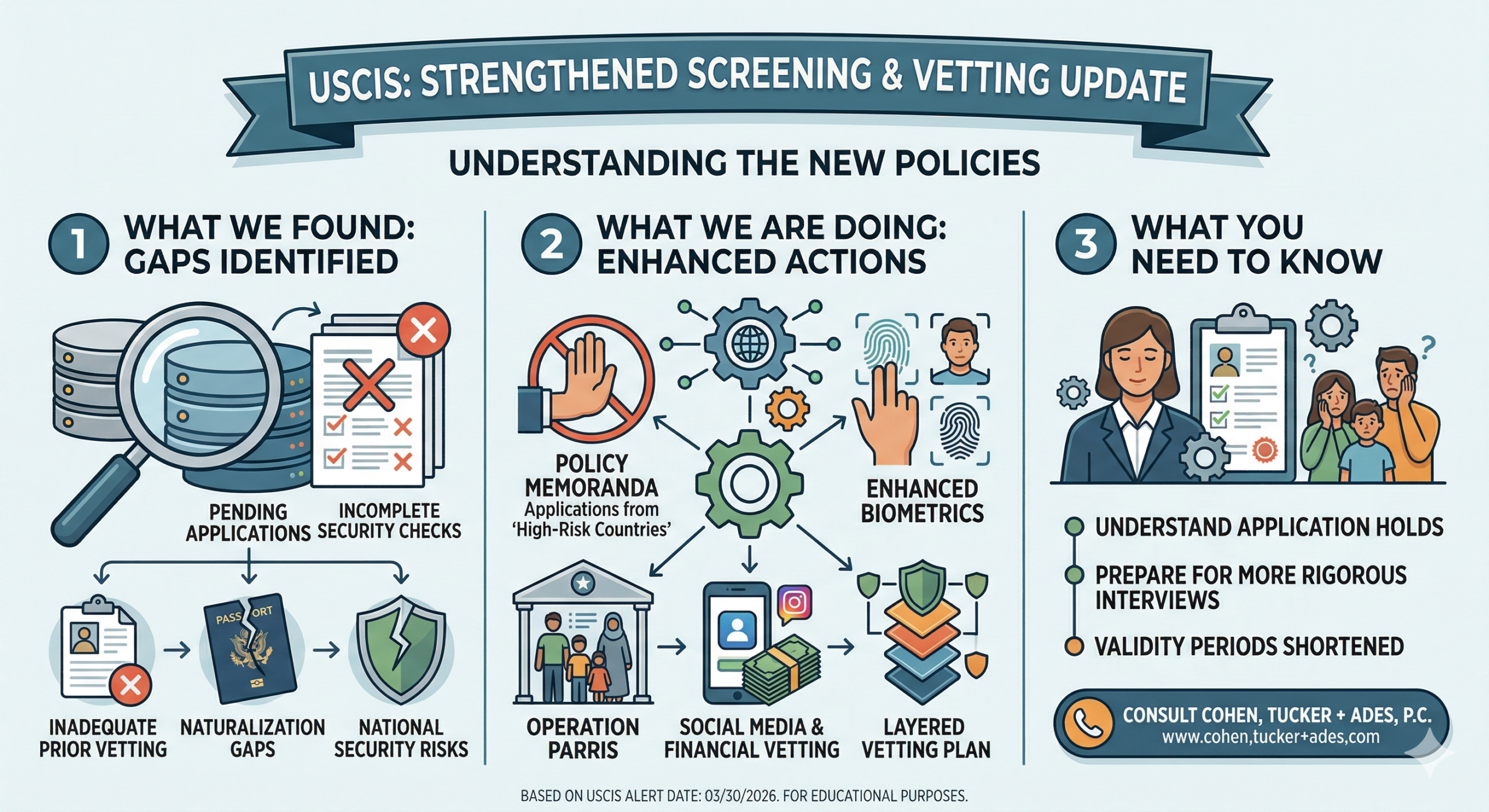
Following a comprehensive review of pending workloads, USCIS determined that previous vetting measures were insufficient. The agency identified “gaps” where individuals were naturalized or granted permanent residence without what they now deem adequate security checks. Consequently, the administration has implemented stricter mandates to vet applicants “to the maximum degree possible”.
To address these concerns, USCIS issued several Policy Memoranda (PM-602-0192, 0193, and 0194). These directives placed a temporary hold on specific application types, including:
Asylum applications from high-risk countries.
Diversity Immigrant Visa Program adjustment of status applications.
Various benefit requests filed by aliens from 39 identified high-risk countries.
USCIS has introduced a series of enhanced practices to strengthen identity verification and national security:
Employment Authorization (EADs): Validity periods are being shortened for certain documents to trigger more frequent security checks.
Biometrics and Identity: Updates to photograph reuse policies now include biometric identity verification when fingerprints are reused.
Increased Interviews: There is a notable increase in social media vetting, financial vetting, and community interviews.
Operation PARRIS: This initiative, led by the USCIS Vetting Center, focuses on additional background checks, re-interviews, and merit reviews specifically for refugee claims.
Automated Monitoring: New systems now provide automatic notifications for biometric matches or new criminal information during the application process.
While many applications were placed on hold, USCIS has established an internal process to lift these holds after a “comprehensive review”. Currently, holds have been lifted for certain categories, such as:
Petitions filed by U.S. citizens and intercountry adoption forms.
Asylum applications from non-high-risk countries.
Certain Special Immigrant Visa (SIV) petitions and specific EADs.
Refugee registrations for South African nationals.
The immigration landscape is becoming increasingly complex, with a “layered vetting plan” that incorporates both classified and unclassified information. If you are an applicant from a country identified in recent travel proclamations, you may face more rigorous interviews aligned with specific risks identified for that region.
Cohen, Tucker + Ades, P.C. remains dedicated to helping our clients navigate these evolving requirements. As USCIS continues to update its screening procedures and country-specific risk analyses, having experienced legal guidance is more critical than ever.
Disclaimer: This blog post contains general information and is for informational purposes only. It is not legal advice and does not create an attorney-client relationship between you and Cohen, Tucker + Ades P.C. Immigration laws and fee schedules are subject to frequent change. The information provided herein may not reflect the most current legal developments. You should not act or refrain from acting based on information contained in this post without seeking professional counsel from an attorney licensed in your jurisdiction. Cohen, Tucker + Ades P.C. expressly disclaims all liability in respect to actions taken or not taken based on any or all of the contents of this post.
Sources: