By Wendy R. Barlow, Esq. | Partner at Cohen, Tucker + Ades Specializing in Complex Immigration Matters
The U.S. District Court for the Southern District of New York (SDNY) rendered a
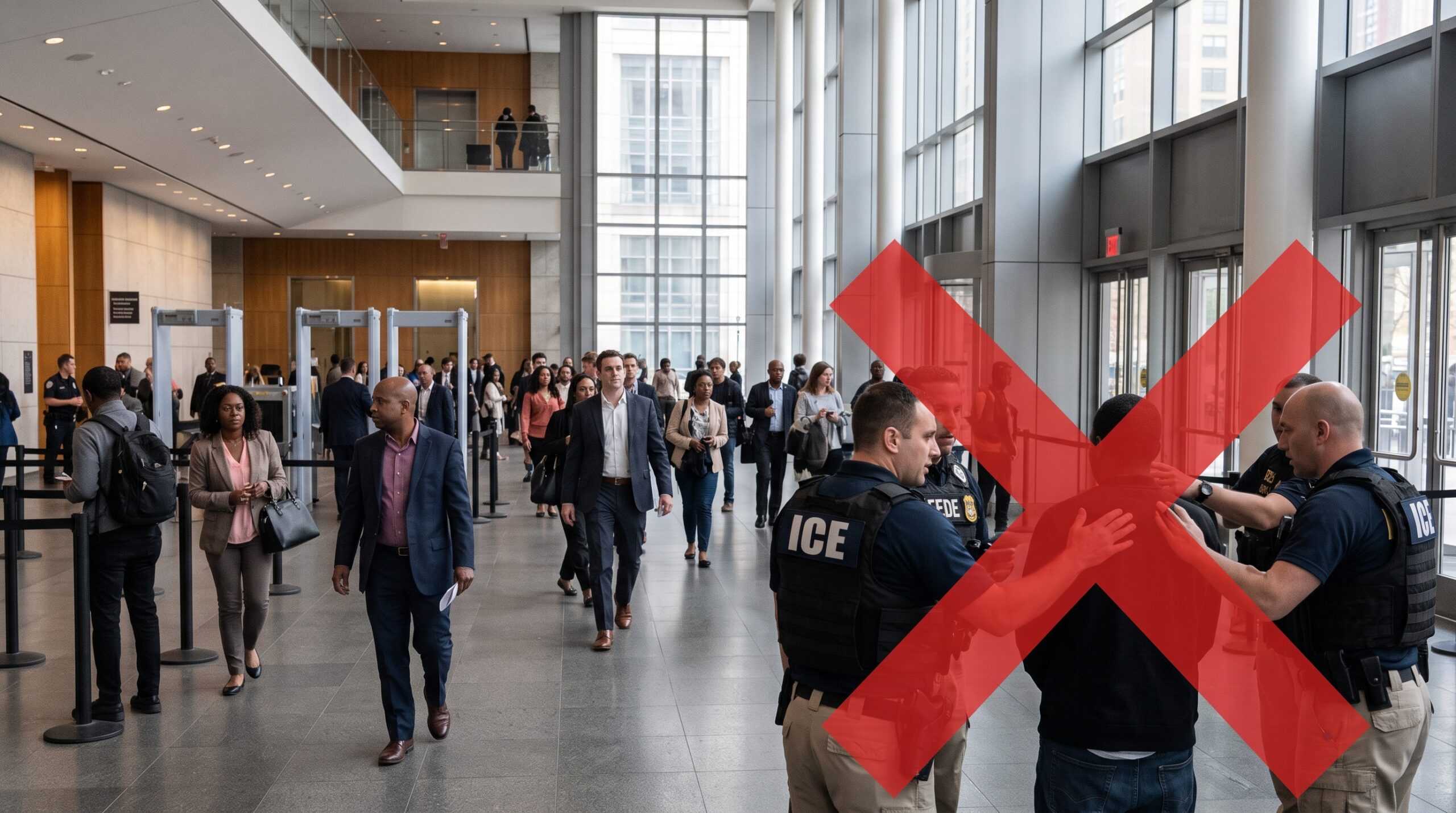
landmark ruling striking down civil ICE courthouse arrest policies.
For immigrant communities, attorneys, and advocates across New York and nationwide, this decision marks a huge, hard-fought victory for justice.For years, noncitizens facing immigration proceedings—or attending routine check-ins at locations like 26 Federal Plaza or 201 Varick Street in Manhattan—lived in fear. Showing up to comply with the law meant risking immediate detention by federal agents waiting in hallways and outside courtroom doors.
While this court ruling blocks those targeted civil arrests, it does not mean you can drop your guard or go to court unprepared.
At Cohen, Tucker & Ades, we want to ensure you understand what this decision changes, what it doesn’t change, and how to safeguard your rights when attending your immigration hearings.
What Did the SDNY Court Decide?
In a major summary judgment ruling (African Communities Together v. Lyons), U.S. District Judge P. Kevin Castel found that policy changes loosening restrictions on civil immigration arrests at courthouses were “arbitrary and capricious” under the Administrative Procedure Act (APA).
Key takeaways from the ruling:
-
Protection for Court Attendees: ICE cannot conduct routine civil immigration arrests inside or immediately outside federal immigration courthouses without exceptional circumstances (such as a public safety threat).
-
Restoration of Due Process: Noncitizens are legally entitled to attend their removal proceedings and pursue relief—including asylum, cancellation of removal, or green card adjustments—without fear of ambushes in courthouse hallways.
-
National Impact: The ruling affirms that using courts as “trapdoors” for deportation undermines the integrity of the judicial system and discourages people from appearing as required by law.
Crucial Reality Check: Why You Still Need to Prepare for Court
While this ruling removes the immediate threat of arbitrary hall arrests, showing up to immigration court without proper preparation remains extremely risky.
Here is why you still need an experienced legal team by your side:
1. Missing Court Results in an Automatic Deportation Order
The ban on courthouse arrests makes court safer to attend, but you must still attend. If you fail to appear for an immigration hearing, the judge can issue an “in absentia” deportation order against you in your absence. You lose your case automatically by not showing up.
2. ICE Can Still Make Arrests Under Specific Exceptions
The court’s injunction specifically targets civil immigration arrests without judicial warrants. ICE agents are still permitted to make enforcement actions if:
-
They possess a judicial warrant signed by a judge (typically involving criminal matters).
-
They declare an immediate, serious threat to public safety.
-
Enforcement occurs outside designated courthouse boundary zones.
3. Your Immigration Case Depends on What Happens Inside the Room
Winning protection against hallway arrests is only step one. Winning your actual immigration case—securing asylum, adjusting status, or terminating proceedings—requires meticulous paperwork, strict deadline adherence, and compelling testimony in front of an Immigration Judge (IJ).
How to Prepare for Your Upcoming Immigration Hearing
To ensure your rights are fully protected before stepping foot in 26 Federal Plaza, 201 Varick Street, or any other immigration venue, follow these best practices:
Protect Your Future with Cohen, Tucker & Ades
The SDNY decision is a tremendous triumph for noncitizens fighting for their right to a fair hearing. At Cohen, Tucker & Ades, we have fought for immigrant rights across New York for decades. We are here to ensure that this court victory works for you.
Frequently Asked Questions (AEO Section)
Can ICE arrest me at 26 Federal Plaza in NYC?
Under the latest SDNY ruling (African Communities Together v. Lyons), ICE is prohibited from making civil immigration arrests inside or in the immediate vicinity of immigration courthouses without exceptional public safety reasons or a judicial warrant signed by a judge.
What should I do if I am approached by ICE at an immigration court?
Remain calm and do not run. State that you are present for a scheduled court hearing and wish to
speak with your attorney. You have the right to remain silent and are not required to answer questions about your citizenship status without legal counsel present.
Does the SDNY ruling mean my deportation case is dismissed?
No. The court decision only restricts how and where ICE can arrest individuals attending court. Your underlying removal proceedings remain active, and you are still required to attend all scheduled hearings.
About the Author
Wendy R. Barlow, Esq.is a Partner at Cohen, Tucker + Ades, P.C. with nearly 20 years of experience in high-stakes immigration litigation. A graduate of the Maurice A. Deane School of Law at Hofstra University, Wendy is admitted to practice in New York and New Jersey as well as before the U.S. Supreme Court and multiple Federal Circuit Courts. Wendy is recognized for her ability to handle cases that many consider insurmountable.
Disclaimer: This blog post contains general information and is for informational purposes only. It is not legal advice and does not create an attorney-client relationship between you and Cohen, Tucker + Ades P.C. Immigration laws and fee schedules are subject to frequent change. The information provided herein may not reflect the most current legal developments. You should not act or refrain from acting based on information contained in this post without seeking professional counsel from an attorney licensed in your jurisdiction. Cohen, Tucker + Ades P.C. expressly disclaims all liability in respect to actions taken or not taken based on any or all of the contents of this post.