Immigration Law Blog
Stay up-to-date on the latest immigration law news, with the Cohen, Tucker & Ades team's insights behind the headlines

In the digital age, it is tempting to turn to Artificial Intelligence (AI) for quick answers to complex questions. Whether you are curious about your rights in a criminal case or trying to navigate the complexities of a U.S. visa application, tools like ChatGPT and Claude are only a click away.
However, a groundbreaking new court decision from the Southern District of New York—United States v. Bradley Heppner—serves as a massive “proceed with caution” sign. For those navigating the high-stakes world of U.S. immigration, the lessons from this case are vital.
In February 2026, Judge Jed Rakoff ruled on a novel issue: Are your conversations with an AI protected by attorney-client privilege?
In this case, a defendant had used the AI platform “Claude” to research legal issues and organize his thoughts before he was even charged. When the government seized his devices, they found these AI prompts. The defendant argued that these communications should be protected and kept private, much like a conversation with a lawyer.
The Court disagreed. Judge Rakoff ruled that these documents were not privileged for two main reasons:
AI is not an attorney: Privilege only exists in a relationship between a human client and a licensed human attorney.
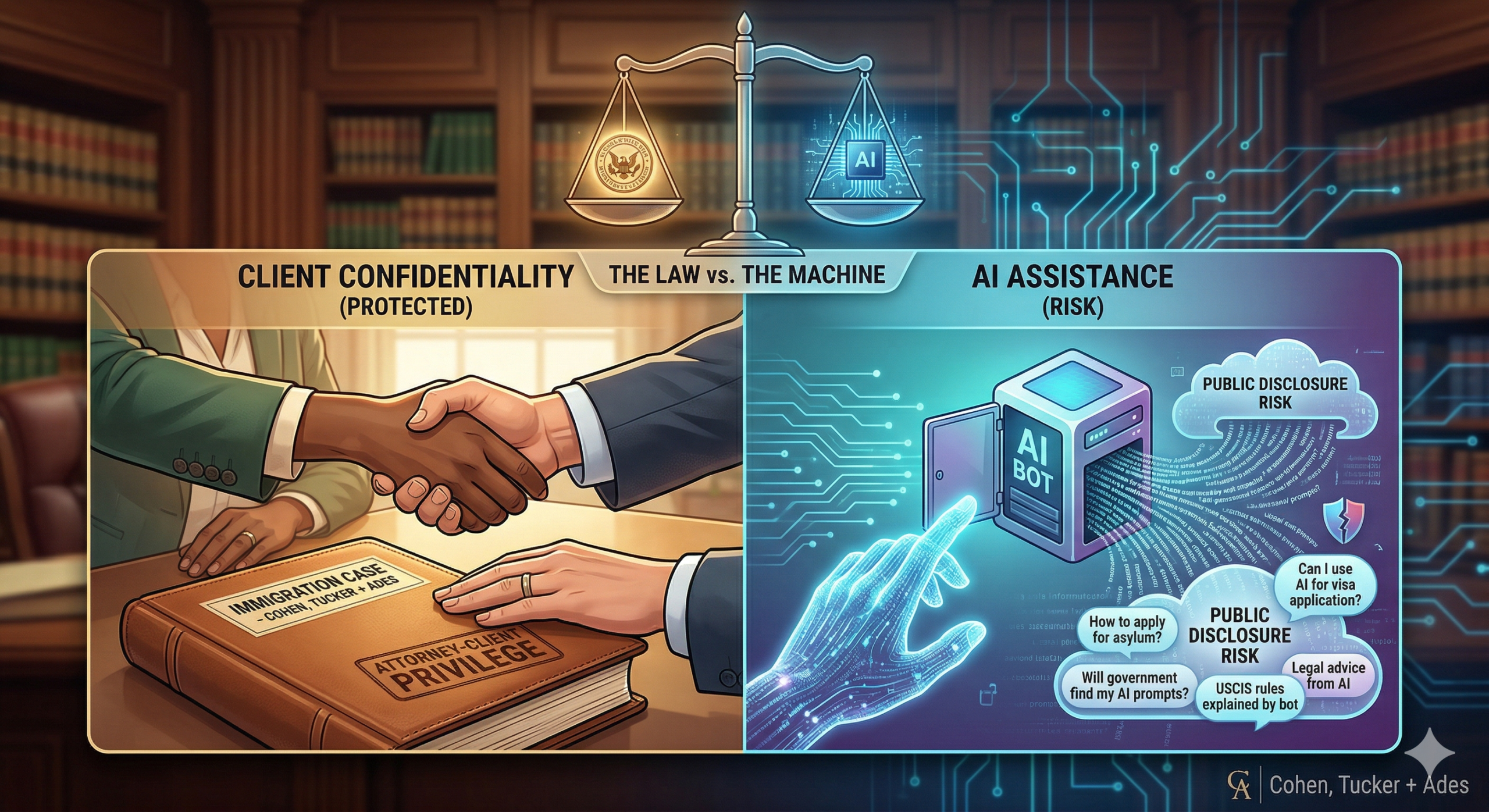
No expectation of privacy: Most AI platforms have privacy policies stating they can review your “inputs” to train their models or share them with third parties. Because the user agreed to these terms, the court ruled there was no “reasonable expectation of confidentiality.”
While the Heppner case was a criminal matter, the logic applies directly to immigration law. Here is why you should be careful before “consulting” an AI about your status:
If you use AI to ask questions like “How can I bypass this visa requirement?” or “What should I say to an asylum officer to sound more convincing?”, those prompts are not secret. If the government ever investigates your filing or places you in removal proceedings, those AI logs could be subpoenaed and used to show “fraudulent intent” or “preconceived intent.”
When you speak to a lawyer at Cohen, Tucker + Ades, your secrets are protected by law. When you speak to a chatbot, you are essentially shouting your secrets in a public square where the tech company (and potentially the government) can listen in.
Immigration law changes almost daily. AI models are often trained on outdated data. Relying on a bot for legal strategy can lead to “hallucinations”—where the AI confidently gives you a legal answer that is completely made up. In immigration, one wrong form or one missed deadline can result in deportation.
AI is a powerful tool for drafting emails or summarizing articles, but it is a dangerous “lawyer.”
The Heppner decision confirms that the law does not view your chatbot as a confidant. If you have concerns about your immigration status, your past, or your future in the United States, do not trust a prompt box. Trust a licensed professional who is legally bound to protect your interests.
Protect your future. Before you prompt, call the experts at Cohen, Tucker + Ades.
Disclaimer: This blog post contains general information and is for informational purposes only. It is not legal advice and does not create an attorney-client relationship between you and Cohen, Tucker + Ades P.C. Immigration laws and fee schedules are subject to frequent change. The information provided herein may not reflect the most current legal developments. You should not act or refrain from acting based on information contained in this post without seeking professional counsel from an attorney licensed in your jurisdiction. Cohen, Tucker + Ades P.C. expressly disclaims all liability in respect to actions taken or not taken based on any or all of the contents of this post.
Sources: