Immigration Law Blog
Stay up-to-date on the latest immigration law news, with the Cohen, Tucker & Ades team's insights behind the headlines

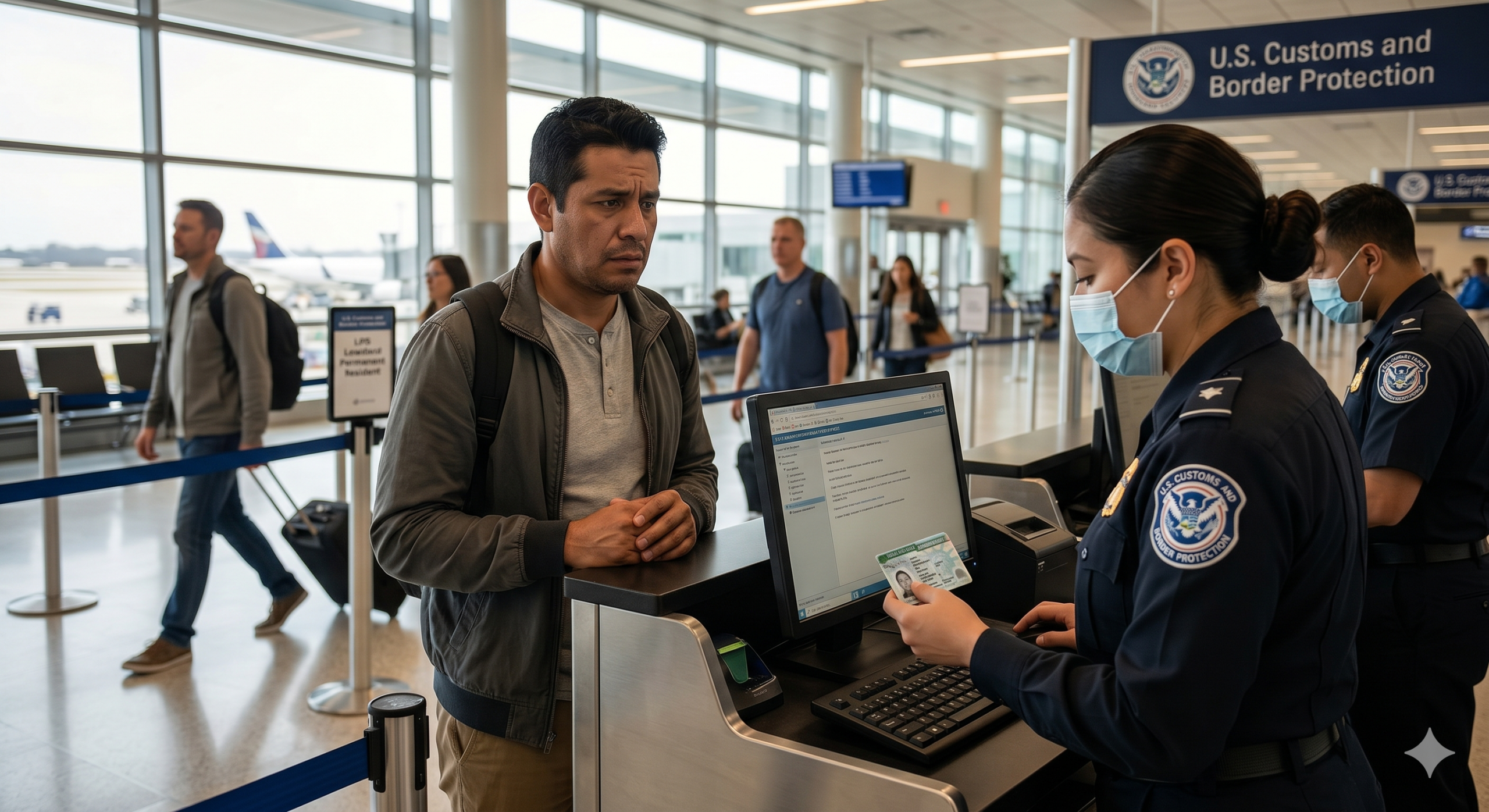
The U.S. Supreme Court recently handed down a major 6-3 decision in Blanche v. Lau (June 24, 2026). Authored by Justice Clarence Thomas, this ruling fundamentally shifts the power dynamic at the border, leaving Lawful Permanent Residents (LPRs)—commonly known as green card holders—uniquely vulnerable if they travel internationally while facing criminal allegations.
At Cohen, Tucker + Ades, we believe it is vital for our community to understand how this major legal shift impacts their freedom to travel and security in the United States.
Historically, green card holders returning from a brief trip abroad enjoy a presumption of safety: they are treated as already “admitted” to the United States. This means Customs and Border Protection (CBP) cannot easily strip their status or place them in deportation proceedings at the airport unless they have ironclad proof of a disqualifying event.
The case centered on Muk Choi Lau, a green card holder who traveled abroad while facing a pending, unproven state charge for trademark counterfeiting. Upon his return, border agents did not officially admit him. Instead, they confiscated his physical green card and placed him on immigration parole (allowing him to physically enter the country but legally treating him as an “applicant for admission” standing at the border). Years later, after he pled guilty, the government used that subsequent conviction to justify their initial choice to halt his entry.
The Second Circuit Court of Appeals initially ruled in favor of Mr. Lau, stating that the government must possess “clear and convincing evidence” that a crime was committed at the moment the traveler stands at the border.
The Supreme Court reversed the lower court’s decision. Justice Thomas wrote that the Immigration and Nationality Act (INA) does not require border officers to have clear and convincing evidence at the port of entry to treat an LPR as an applicant for admission.
Instead, if there is a “reason to believe” or a pending allegation of a Crime Involving Moral Turpitude (CIMT) or a drug offense, the government can effectively “hit the pause button.” They can seize your green card, place you on parole, and wait to see if a conviction later materializes to deport you.
As Justice Ketanji Brown Jackson warned in her sharp dissent, this ruling hands the government a massive “blank check,” allowing them to place an LPR’s legal status in an indefinite limbo based on mere pending charges or suspicion at the border, justifying the choice only after the fact.
⚠️ Crucial Travel Warning: Do Not Leave the U.S. If You Have a Criminal Matter
If you are a Lawful Permanent Resident and have any pending criminal charges, an open arrest warrant, a past arrest, or an unresolved criminal investigation, do not travel outside the United States.
Under Blanche v. Lau, returning to the U.S. with an open criminal issue gives border agents the green light to confiscate your green card and place you into a legal limbo that can take years to resolve. Even minor offenses—ranging from certain theft or fraud allegations to driving offenses—can be flagged as Crimes Involving Moral Turpitude. Do not risk your permanent residency on a temporary trip.
If you are an LPR, the rules of international travel have changed. You can no longer assume your green card guarantees a seamless return if your background check flags an active open matter.
Before booking any international travel, it is vital to have an experienced immigration attorney review your records to ensure you will not be detained, paroled, or stripped of your documentation at a port of entry.
Your green card represents years of hard work, sacrifice, and your future in the United States. Do not let a single trip abroad jeopardize everything you have built.
If you are a permanent resident with a past arrest, a pending charge, or questions about how Blanche v. Lau impacts your upcoming travel plans, our seasoned legal team is here to protect you. We can review your case, evaluate your risks, and help you navigate the system safely. Schedule a Confidential Consultation with Cohen, Tucker + Ades today or call our New York office at 212-840-0050.
Wendy R. Barlow, Esq.is a Partner at Cohen, Tucker + Ades, P.C. with nearly 20 years of experience in high-stakes immigration litigation. A graduate of the Maurice A. Deane School of Law at Hofstra University, Wendy is admitted to practice in New York and New Jersey as well as before the U.S. Supreme Court and multiple Federal Circuit Courts. Wendy is recognized for her ability to handle cases that many consider insurmountable.
Disclaimer: This blog post contains general information and is for informational purposes only. It is not legal advice and does not create an attorney-client relationship between you and Cohen, Tucker + Ades P.C. Immigration laws and fee schedules are subject to frequent change. The information provided herein may not reflect the most current legal developments. You should not act or refrain from acting based on information contained in this post without seeking professional counsel from an attorney licensed in your jurisdiction. Cohen, Tucker + Ades P.C. expressly disclaims all liability in respect to actions taken or not taken based on any or all of the contents of this post.