Immigration Law Blog
Stay up-to-date on the latest immigration law news, with the Cohen, Tucker & Ades team's insights behind the headlines

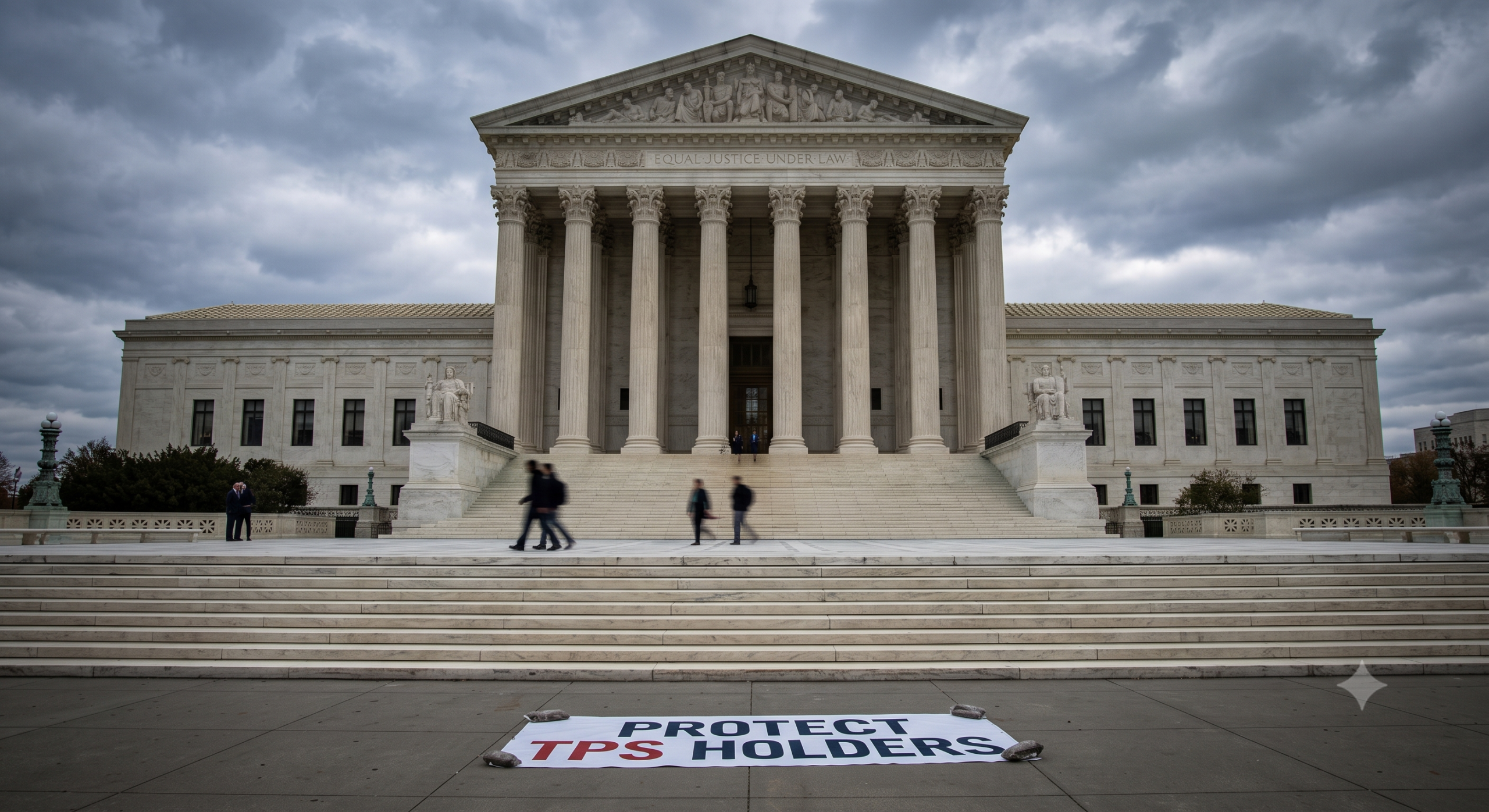
On June 25, 2026, the United States Supreme Court delivered a seismic shift in immigration law. In a 6-3 decision in Mullin v. Doe, the Court ruled that federal courts are barred from reviewing non-constitutional challenges to Temporary Protected Status (TPS) terminations.
This decision effectively hands the Department of Homeland Security (DHS) unchecked authority to wind down humanitarian protections for over a million individuals nationwide. If you or a loved one currently rely on TPS to live and work in the United States, the time to act is now.
Key Takeaway: The Supreme Court has ruled that the courts cannot second-guess a DHS decision to terminate TPS. Current court-ordered stays protecting nationals from countries like Haiti, Syria, Venezuela, Burma, Ethiopia, and Somalia are highly vulnerable or completely foreclosed.
For decades, TPS functioned as a reliable safety net. However, recent executive and judicial actions have fundamentally altered the program’s nature. Here is why reliance on TPS alone is now highly risky:
The Court ruled that the TPS statute isolates DHS “determinations” from judicial review. Arguments that the administration failed to properly evaluate country conditions or skipped required interagency consultations can no longer be used by federal judges to block a termination.
Under aggressive policy directives, DHS has aggressively moved to terminate TPS designations as they come up for renewal. With the Supreme Court lifting lower-court injunctions, protections for approximately 350,000 Haitians and several thousand Syrians are being rolled back, setting a immediate precedent for 11 other nations.
Existing court-ordered stays in various federal circuits—which previously protected TPS holders from countries like Yemen, Sudan, and Honduras—are expected to be swiftly dissolved by the government following this high court precedent.
Losing TPS does not mean you are completely out of legal options, but it does mean you must proactively pivot to a permanent immigration category.
| Alternative Route | Who It’s For | Key Benefit |
| Family-Based Petitions | Individuals with a U.S. citizen or LPR spouse, parent, or adult child. | Direct path to a Green Card (Adjustment of Status). |
| Employment-Based Visas | Skilled workers, professionals, or sponsored employees. | Shifts reliance from humanitarian status to employer backing (H-1B, EB-2, EB-3). |
| Affirmative Asylum | Individuals who fear targeted persecution if returned home. | Though border asylum rules have tightened, those already inside the U.S. maintain statutory asylum rights. |
| Cancellation of Removal / Hardship Waivers | Long-term residents with deep ties and qualifying U.S. relatives. | A defensive legal shield if facing immigration court proceedings. |
For many TPS holders, traveling and returning via Advance Parole allowed them to clear an “unlawful entry” hurdle, making them eligible to adjust status through a U.S. citizen relative. Because your Employment Authorization Document (EAD) and TPS status face upcoming expiration dates based on impending DHS implementation guidance, executing these strategies requires flawless legal timing.
No. The Supreme Court’s ruling allows DHS to begin winding down programs and updating implementation guidelines. It does not trigger automatic, overnight deportations. However, it means your work authorization and protection from removal have a rapidly approaching expiration date.
Do not wait for your current extension or EAD to lapse. You must immediately schedule a comprehensive evaluation with an experienced immigration attorney to look for overlapping equities—such as an employer willing to sponsor you or a family dynamic that permits a petition.
If you are already inside the geographic borders of the United States, you still retain the legal right to apply for affirmative or defensive asylum. The restriction upheld in companion rulings exclusively targets individuals trying to apply at land-based ports of entry before stepping onto U.S. soil.
Immigration laws are incredibly complex, and navigating a post-TPS landscape requires aggressive, strategic, and compassionate advocacy. At Cohen, Tucker + Ades, P.C., our legal team specializes in complex deportation defense, adjustment of status, and custom corporate and family immigration solutions.
Do not let a shift in federal policy dictate your family’s future. Contact our New York City office today to evaluate your alternatives and build a secure pathway to stay in the United States.
Wendy R. Barlow, Esq.is a Partner at Cohen, Tucker + Ades, P.C. with nearly 20 years of experience in high-stakes immigration litigation. A graduate of the Maurice A. Deane School of Law at Hofstra University, Wendy is admitted to practice in New York and New Jersey as well as before the U.S. Supreme Court and multiple Federal Circuit Courts. Wendy is recognized for her ability to handle cases that many consider insurmountable.
Disclaimer: This blog post contains general information and is for informational purposes only. It is not legal advice and does not create an attorney-client relationship between you and Cohen, Tucker + Ades P.C. Immigration laws and fee schedules are subject to frequent change. The information provided herein may not reflect the most current legal developments. You should not act or refrain from acting based on information contained in this post without seeking professional counsel from an attorney licensed in your jurisdiction. Cohen, Tucker + Ades P.C. expressly disclaims all liability in respect to actions taken or not taken based on any or all of the contents of this post.