Immigration Law Blog
Stay up-to-date on the latest immigration law news, with the Cohen, Tucker & Ades team's insights behind the headlines

By Wendy R. Barlow, Esq. | Partner at Cohen, Tucker + Ades Specializing in Complex Immigration Matters
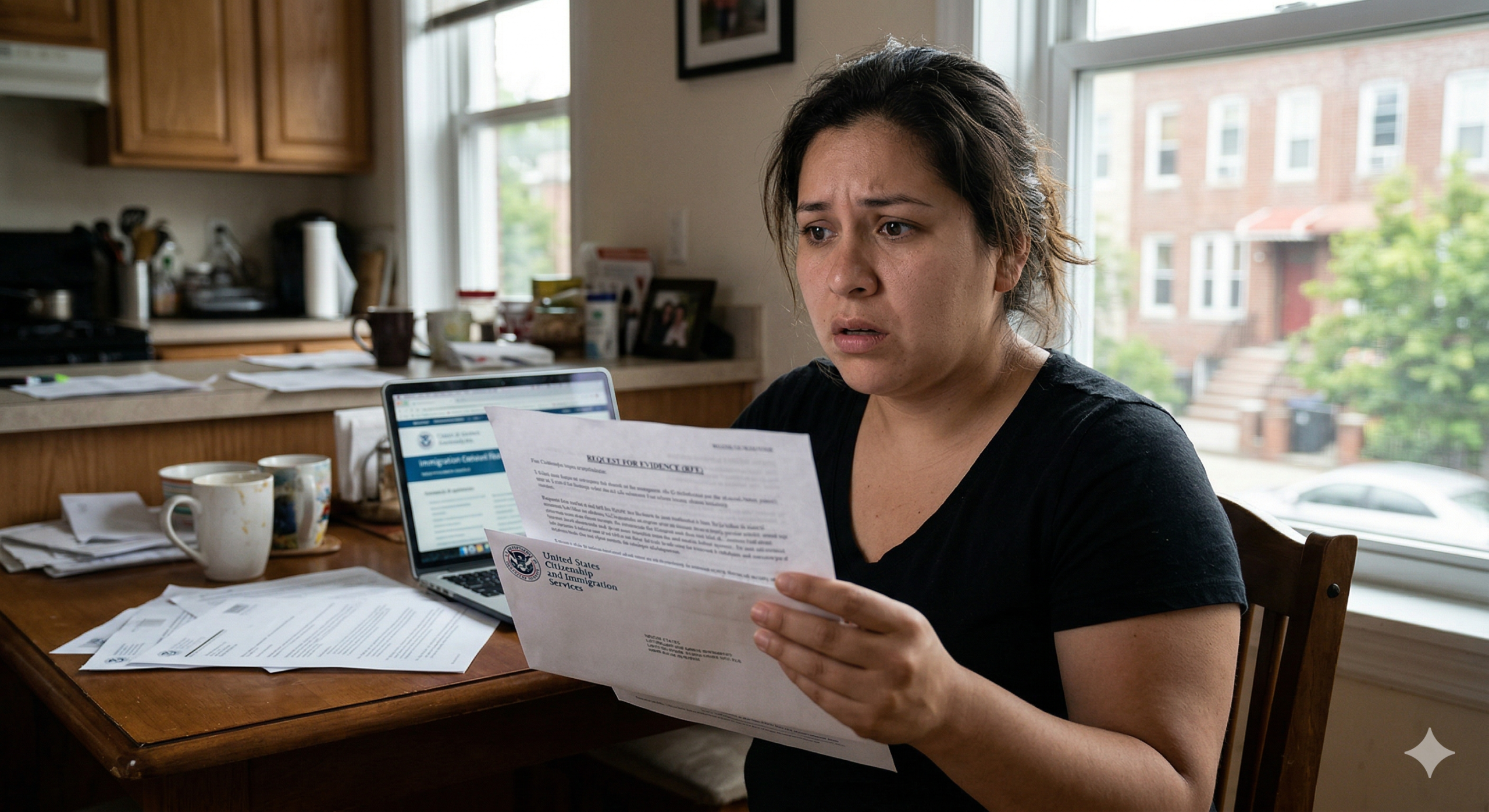
Are you facing a Request for Evidence (RFE) or a Notice of Intent to Deny (NOID) from USCIS? You are not alone. In 2026, USCIS has significantly increased its scrutiny of immigration filings, particularly for employment-based visas (EB-1, EB-2 NIW) and complex family-based cases. At Cohen, Tucker + Ades, we specialize in navigating these hurdles to turn a potential denial into an approval.
USCIS is issuing more RFEs, NOIDs, and Denials due to heightened evidentiary standards and the integration of AI-assisted screening. Currently, denial rates for EB-2 National Interest Waivers (NIW) have reached nearly 40%, while EB-1A “Extraordinary Ability” petitions face increased scrutiny regarding the “sustained acclaim” standard. Adjudicators are now requiring more granular detail, particularly regarding specialized knowledge and national merit.
USCIS has implemented advanced AI tools to cross-reference data across multiple filings. Even a minor discrepancy in a job title or a missing signature on a paper-filed form can now trigger an automatic RFE.
For EB-2 NIW and EB-1A petitions, the “substantial merit” of a proposed endeavor is being evaluated more strictly. USCIS often claims that the evidence provided is “questionable” or “insufficiently verifiable” without high-level expert testimony.
As of late 2025 and early 2026, USCIS has strictly enforced new signature requirements and payment protocols. Administrative errors that were once overlooked now lead to immediate rejections.
Think of these three as stages of a “traffic light” system for your immigration case. An RFE is a yellow light, a NOID is a flashing red light, and a Denial is a stop sign.
Here is a breakdown of the differences in terms of severity, timing, and strategy.
The Scenario: “We like your application, but we need more proof.”
Status: Your case is on hold. The officer hasn’t decided yet.
The Reason: You missed a document (like a birth certificate), a form was outdated, or the officer needs more details to be convinced of your eligibility.
The Window: Usually 30 to 87 days to respond.
The Strategy: Provide exactly what they asked for (and often a bit more) to bridge the gap.
The Scenario: “We have looked at your case and, based on what we see, we are planning to deny it.”
Status: High Alert. This is much more serious than an RFE.
The Reason: The officer found a specific reason you are ineligible—such as a failed marriage interview, a suspected “sham” business, or a legal issue like a prior visa overstay.
The Window: Very tight—usually only 30 days.
The Strategy: This requires a heavy legal rebuttal. You aren’t just “sending a document”; you are arguing why the officer’s plan to deny you is legally or factually wrong.
The Scenario: “Your application has been denied.”
Status: Case Closed. Your current “legal stay” based on that pending application may end immediately.
The Reason: You failed to respond to an RFE/NOID, or your response didn’t convince the officer, or you are fundamentally ineligible for the benefit.
The Window: You usually have 30 days to file an appeal or a motion to reopen/reconsider.
The Strategy: You must decide whether to appeal the decision, file a Motion to Reopen (if you have new facts), file a Motion to Reconsider (if USCIS made a legal or factual error), or start over with a fresh application (if possible).
| Feature | RFE | NOID | Denial |
| Severity | Low to Moderate | High / Critical | Final Decision |
| USCIS Message | “Tell me more.” | “I don’t believe you.” | “The answer is No.” |
| Immediate Action | Gather missing docs. | Legal argument/rebuttal. | Appeal or Re-file. |
| Typical Deadline | 30–90 Days | 30 Days | 30 Days (to appeal) |
Typically, you have 30 to 90 days to respond to an RFE, depending on the specific notice. It is critical to submit a complete response all at once, as USCIS will not consider supplemental evidence sent later.
Yes, most USCIS denials can be appealed. Depending on the case type, you may file a Motion to Reopen, a Motion to Reconsider, or an appeal to the AAO. You generally have only 30 days from the date of the decision to file.
No, an RFE is an opportunity to fix your case. With the right legal strategy and additional evidence, many RFEs lead to successful approvals.
The most common reasons for a USCIS RFE include:
Inadequate Documentation: Failure to provide a clear “paper trail” for source of funds or employment history.
Lack of Expert Evidence: Not including expert opinion letters to validate specialized skills or educational equivalencies.
Inconsistency: Discrepancies between your resume, your employer’s letter, and the USCIS forms.
Specialized Knowledge Gaps: In L-1B cases, failing to prove that an employee’s knowledge is truly unique to the organization.
While an RFE often addresses “missing pieces,” a NOID usually targets the “core eligibility” of your case. Current trends show USCIS issuing NOIDs for:
Failed Marriage Interviews (Stokes Interviews): In family-based cases, if a couple provides conflicting answers during an interview, USCIS may issue a NOID questioning the “bona fides” of the marriage.
Site Visit Adverse Findings: For H-1B or L-1 visas, if a USCIS officer visits a worksite and finds the beneficiary is not there or the business looks “inactive,” a NOID is often the immediate result.
Inadmissibility Issues: Discovery of a prior criminal record or an undisclosed immigration violation (such as unauthorized work or overstaying a previous visa).
Legal Ineligibility: The officer believes the “Proposed Endeavor” in an EB-2 NIW case does not truly have national importance, or an H-1B role does not meet the “Specialty Occupation” definition.
The transition from an RFE to a Denial can happen fast if the response isn’t handled with precision.
For RFEs: We ensure your response is “one and done”—comprehensive enough that the officer has no choice but to approve.
For NOIDs: We provide the aggressive legal advocacy needed to change the officer’s mind before the final “No” is issued.
For Denials: We evaluate whether the officer made a legal error and, if so, we fight the decision in the Administrative Appeals Office (AAO) or Federal Court.
Did you receive one of these notices recently? The date on the letter is your “ticking clock”—we can help you determine exactly how many days you have left to act.
Don’t let a complex RFE or a frustrating denial end your American Dream. Cohen, Tucker + Ades has been helping individuals and corporations navigate the “labyrinth” of immigration law since 1964.
Wendy R. Barlow, Esq. is a Partner at Cohen, Tucker + Ades, P.C. with nearly 20 years of experience in high-stakes immigration litigation. A graduate of the Maurice A. Deane School of Law at Hofstra University, Wendy is admitted to practice in New York and New Jersey as well as before the U.S. Supreme Court and multiple Federal Circuit Courts. Wendy is recognized for her ability to handle cases that many consider insurmountable.
Need assistance with an Asylum Cooperation Agreement case? Click here to schedule a consultation with Wendy.
Disclaimer: This blog post contains general information and is for informational purposes only. It is not legal advice and does not create an attorney-client relationship between you and Cohen, Tucker + Ades P.C. Immigration laws and fee schedules are subject to frequent change. The information provided herein may not reflect the most current legal developments. You should not act or refrain from acting based on information contained in this post without seeking professional counsel from an attorney licensed in your jurisdiction. Cohen, Tucker + Ades P.C. expressly disclaims all liability in respect to actions taken or not taken based on any or all of the contents of this post.