Immigration Law Blog
Stay up-to-date on the latest immigration law news, with the Cohen, Tucker & Ades team's insights behind the headlines

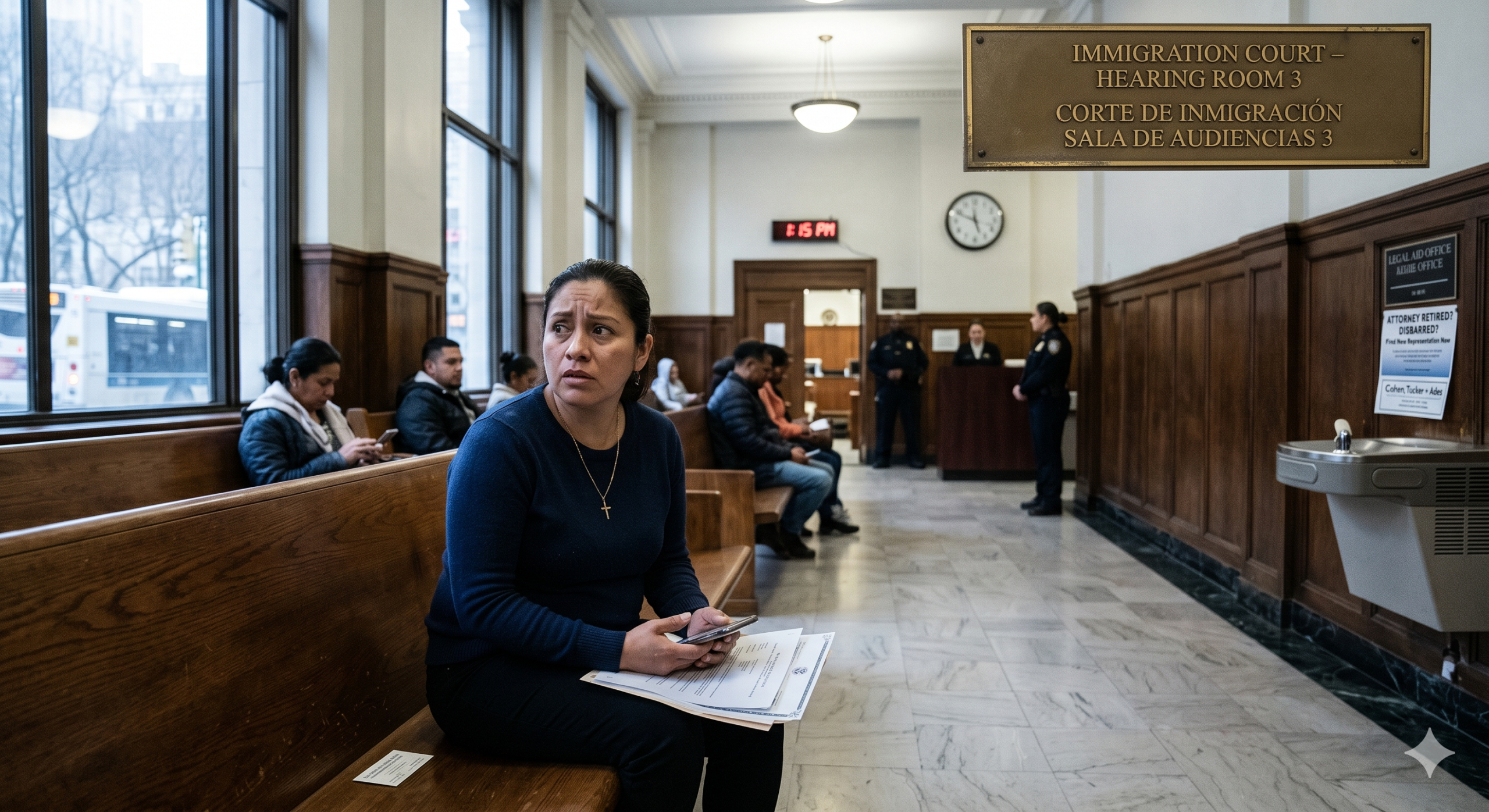
Discovering that your immigration attorney is no longer practicing law can be a terrifying experience. Unlike other areas of law where a delay simply stalls a business deal or a lawsuit, a sudden disruption in an immigration case can jeopardize your legal status in the United States, put you at risk of deportation, or cause you to miss an unforgiving government deadline.
At Cohen, Tucker + Ades, we frequently step in to rescue cases that have been derailed by an unexpected change in counsel. In this guide, we break down exactly what happens—and the urgent actions you must take—if your current representative exits the legal field due to immigration lawyer retirement, attorney disbarment, or an immigration attorney criminal investigation.
Critical Warning: U.S. Citizenship and Immigration Services (USCIS) and the Executive Office for Immigration Review (EOIR) will not automatically pause your case, excuse a missed interview or hearing, or extend a deadline just because your lawyer stopped practicing law. The responsibility to keep your case on track falls entirely on you.
The reason behind your attorney’s sudden departure dictates how quickly and smoothly you can recover your files.
When an immigration lawyer retirement occurs, it is usually a planned event. Under state bar rules, a retiring attorney should give you advance warning, return unearned retainer fees, and provide a clear path to transition your files to a new firm. However, if a solo practitioner retires abruptly without a succession plan, you may be left holding an active green card, visa or asylum application with no one to represent you at an upcoming interview or deportation hearing.
If an attorney commits a severe ethical or financial violation, a state bar or federal agency can issue an attorney disbarment, stripping them of their ability to practice law before the USCIS or the Immigration Court. This could be permanent or a temporary suspension. If your lawyer is disbarred, they are legally prohibited from filing forms, entering an immigration court, or speaking to USCIS on your behalf. While the state bar may eventually appoint a receiver to wind down the firm, waiting for them to mail your files can cause you to miss crucial deadlines.
Unfortunately, fraud schemes do occur within the immigration landscape. If your lawyer becomes the target of an immigration attorney criminal investigation (often led by Immigration and Customs Enforcement [ICE] or Homeland Security Investigations [HSI]), their office may be raided, their computers seized, and their cases frozen. Even worse, USCIS frequently places a temporary hold or heightened scrutiny on all petitions filed by an attorney under investigation, meaning your application could be flagged through no fault of your own.
If your immigration lawyer has gone silent or closed their practice, follow these steps immediately to safeguard your American dream:
If your lawyer’s office is locked or they are completely uncommunicative, you must retrieve your immigration history. You can file a free, fast-tracked Freedom of Information Act (FOIA) request directly with USCIS online to obtain a complete digital copy of your “A-File” (Alien File). If you are in deportation proceedings, you should file a FOIA request with the Executive Office for Immigration Review. This ensures your new legal team has access to every form, receipt, and piece of evidence previously submitted.
Do not wait for mail that might be sent to your old attorney’s office. Enter your 13-character receipt number into the online USCIS Case Status Online tool. If you are in removal proceedings, call the EOIR automated court hotline to check your next Master Calendar or Individual Hearing date. You must know if a Request for Evidence (RFE) or a Notice of Intent to Deny (NOID) has been issued.
As long as your previous attorney has an active Form G-28 on file with USCIS, the government will continue sending important notices and green cards to their office instead of you. Your new attorney will help you file a new Form G-28 to formally sever ties with your old representative and redirect all official government correspondence to your new, secure legal counsel.
Immigration law is incredibly complex and heavily backlogged. To prevent gaps in your status, you need to transition your matter to a highly reputable firm like Cohen, Tucker + Ades. Our team can rapidly audit your USCIS or court timeline, address any red flags left behind by your previous lawyer, and formally take over your representation.
If your lawyer is disbarred, your application remains active with USCIS, but your lawyer can no longer represent you. You must immediately file a new Form G-28 with a new, licensed immigration attorney to ensure all future USCIS correspondence, interview notices, and your physical green card are sent to a secure address.
USCIS will not automatically deny your case just because your lawyer is under investigation. However, the government may place an administrative hold on your file to review it for fraud. If your previous lawyer engaged in misconduct, it is critical to have a new, trusted attorney review everything previously submitted to correct any errors before USCIS takes adverse action.
To change immigration lawyers mid-case, you simply retain a new law firm. Your new attorney will have you sign a new Form G-28 (for USCIS) or file a Motion for Substitution of Counsel (if your case is in Immigration Court). This seamlessly updates the government on who is representing you without disrupting your pending application.
A missing or compromised attorney shouldn’t cost you your future in the United States. If your current immigration lawyer is retiring, has been disbarred, or is facing legal troubles, the team at Cohen, Tucker + Ades is here to step in. We will defend your status, secure your files, and navigate the complexities of USCIS and the immigration courts with the dedicated advocacy you deserve.
Contact Cohen, Tucker + Ades, PC today to secure an urgent consultation and keep your immigration journey safe.
Wendy R. Barlow, Esq.is a Partner at Cohen, Tucker + Ades, P.C. with nearly 20 years of experience in high-stakes immigration litigation. A graduate of the Maurice A. Deane School of Law at Hofstra University, Wendy is admitted to practice in New York and New Jersey as well as before the U.S. Supreme Court and multiple Federal Circuit Courts. Wendy is recognized for her ability to handle cases that many consider insurmountable.
Disclaimer: This blog post contains general information and is for informational purposes only. It is not legal advice and does not create an attorney-client relationship between you and Cohen, Tucker + Ades P.C. Immigration laws and fee schedules are subject to frequent change. The information provided herein may not reflect the most current legal developments. You should not act or refrain from acting based on information contained in this post without seeking professional counsel from an attorney licensed in your jurisdiction. Cohen, Tucker + Ades P.C. expressly disclaims all liability in respect to actions taken or not taken based on any or all of the contents of this post.