By Wendy R. Barlow, Esq. | Partner at Cohen, Tucker + Ades Specializing in Complex Immigration Matters
Direct Answer:
What Changed in the August 2026 USCIS Policy Update?
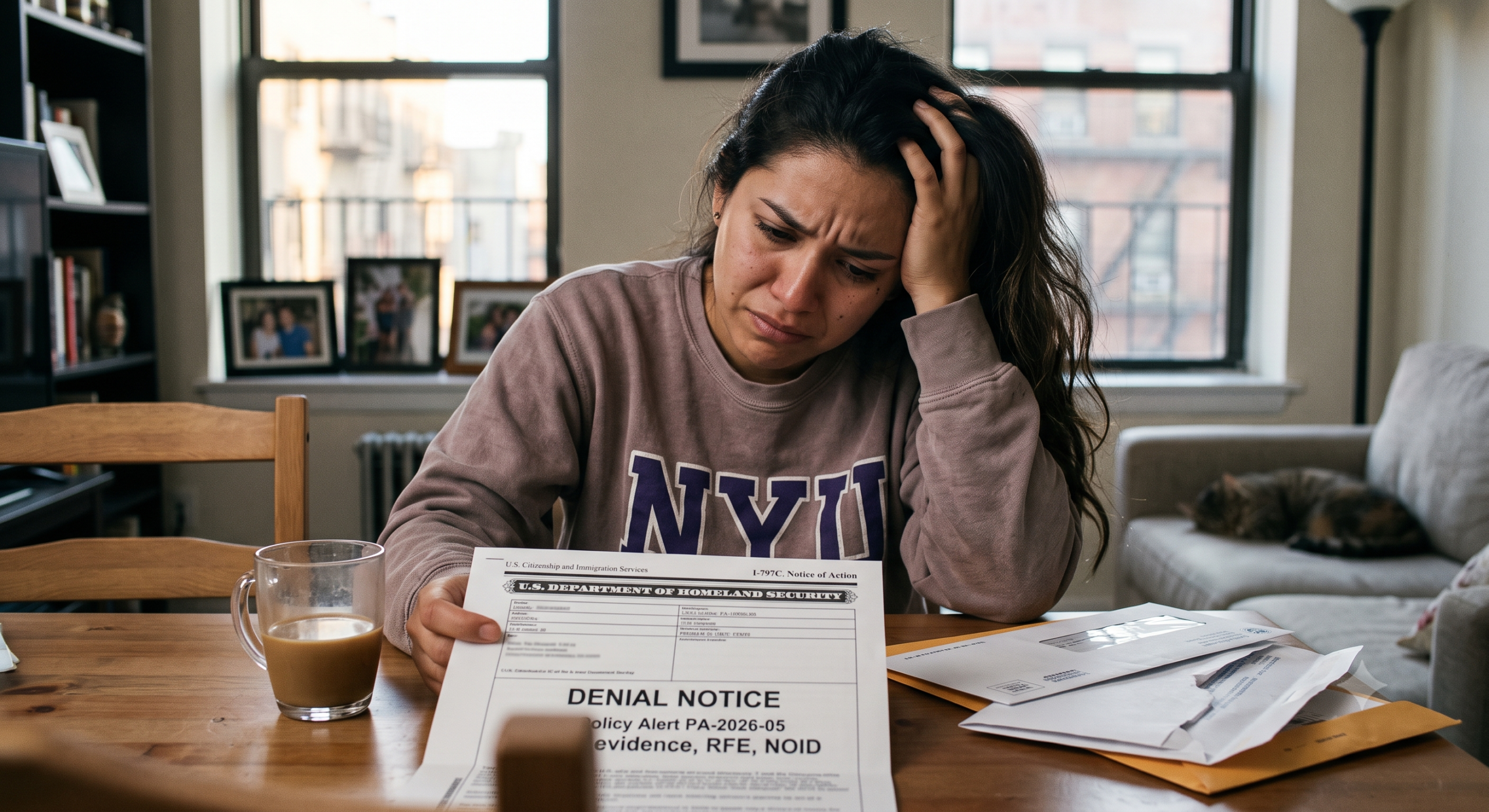
For years, many applicants and non-specialist filers relied on USCIS issuing an RFE or a NOID as a safety net. If an initial filing was incomplete or missing key documentation, USCIS would routinely issue a notice granting extra time to fix the submission.
That safety net is now officially gone.
Under the newly issued policy (effective immediately for all pending and new filings submitted on or after August 5, 2026):
-
Immediate Denials Without Notice: USCIS officers can exercise full discretion to deny applications for lack of initial evidence or failure to establish eligibility without first sending an RFE or NOID.
-
Shorter RFE Response Windows: Officers are no longer required to offer the standard maximum 12-week response timeframe.
-
Elimination of International Mail Buffers: USCIS has eliminated the extra 14-day response time previously granted for notices mailed outside the United States. International correspondence is now subject to the standard 3-day mailing addition.
-
Partial Responses Count as Final Submissions: Submitting a partial response to an RFE or NOID will automatically be treated as a formal request for USCIS to make a final decision on the existing record.
Why Did USCIS Make This Change?
According to USCIS, the prior guidance encouraged “placeholder” or incomplete filings submitted merely to secure temporary advantages (such as work authorization or priority dates). By restoring officer discretion, USCIS aims to reduce processing backlogs, deter frivolous filings, and ensure fairness across all benefit requests.
However, for genuine applicants, families, and businesses, the cost of a simple mistake is now catastrophic—leading to outright denials, lost filing fees, lost priority dates, and potential legal status complications.
What This Means for Your Pending or Future Application
-
Zero Margin for Error: Submitting an application without every piece of required initial evidence—primary or secondary—now carries a high risk of an outright denial.
-
Strict Response Expectations: If you do receive an RFE or NOID, response deadlines may be significantly shorter than expected, making fast action critical.
How Cohen, Tucker + Ades Protects Your Immigration Journey
Navigating shifting federal policies requires battle-tested legal experience. At Cohen, Tucker + Ades, our team brings decades of dedicated immigration law expertise to ensure your application is built to withstand this heightened level of scrutiny.
Here is how our immigration attorneys help you navigate this strict new policy:
-
Comprehensive Front-End Audits: We perform exhaustive pre-filing reviews to ensure 100% compliance with statutory, regulatory, and form-specific initial evidence requirements before anything is submitted to USCIS.
-
Secondary Evidence Strategy: When standard primary documents (such as birth or marriage certificates) are unavailable, we assemble airtight secondary evidence and affidavits that meet USCIS’s strict evidentiary standards.
-
Fast-Action RFE & NOID Response: If you receive an RFE or NOID with a shortened deadline, our team moves immediately to compile a complete, comprehensive response—avoiding the risks associated with partial submissions.
-
Risk Mitigation for Pending Cases: If you already have a pending application that was filed under the old policy, we can evaluate your record now to determine whether supplemental evidence should be proactively prepared.
Don’t Risk an Avoidable USCIS Denial
In this new environment, an incomplete filing is no longer just delayed—it’s denied. Partnering with seasoned immigration counsel ensures your application is right the first time.
Have questions about a pending application or preparing a new immigration request?
About the Author
Wendy R. Barlow, Esq. is a Partner at Cohen, Tucker + Ades, P.C. with nearly 20 years of experience in high-stakes immigration litigation. A graduate of the Maurice A. Deane School of Law at Hofstra University, Wendy is admitted to practice in New York and New Jersey as well as before the U.S. Supreme Court and multiple Federal Circuit Courts. Wendy is recognized for her ability to handle cases that many consider insurmountable.
Need assistance with an Asylum Cooperation Agreement case? Click here to schedule a consultation with Wendy.
Disclaimer: This blog post contains general information and is for informational purposes only. It is not legal advice and does not create an attorney-client relationship between you and Cohen, Tucker + Ades P.C. Immigration laws and fee schedules are subject to frequent change. The information provided herein may not reflect the most current legal developments. You should not act or refrain from acting based on information contained in this post without seeking professional counsel from an attorney licensed in your jurisdiction. Cohen, Tucker + Ades P.C. expressly disclaims all liability in respect to actions taken or not taken based on any or all of the contents of this post.