Immigration Law Blog
Stay up-to-date on the latest immigration law news, with the Cohen, Tucker & Ades team's insights behind the headlines

TL;DR
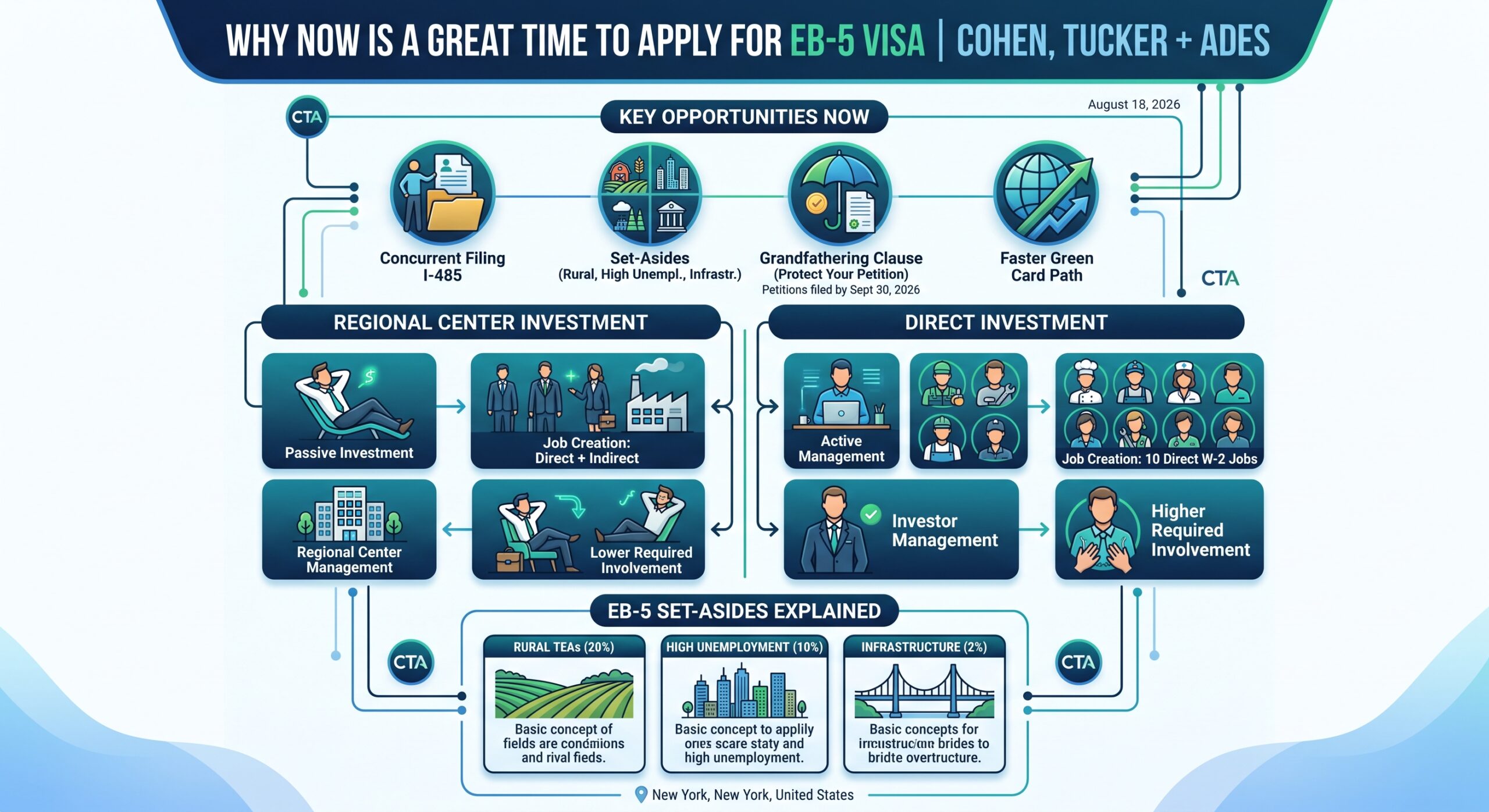
The EB-5 Immigrant Investor Program currently offers foreign investors one of the fastest paths to a U.S. Green Card. Under the EB-5 Reform and Integrity Act (RIA), applicants can take advantage of concurrent filing inside the U.S., priority processing for Rural set-aside projects, and protection under the RIA Grandfathering Clause for petitions filed before September 30, 2026.
For foreign investors and high-net-worth individuals seeking U.S. permanent residency, navigating the immigration landscape can feel complex. However, procedural advantages make the current environment one of the most advantageous times to apply for an EB-5 Immigrant Investor Visa.
At Cohen, Tucker + Ades, our immigration team guides investors through every stage of the process, ensuring compliance with U.S. Citizenship and Immigration Services (USCIS) requirements while maximizing available statutory benefits.
┌─────────────────────────────────────────────────────────┐
│              ANNUAL EB-5 VISA SET-ASIDES                 │
├──────────────────────────┬──────────────────────────────┤
│ Rural TEAs               │ 20% Allocation (Fast-Track)  │
├──────────────────────────┼──────────────────────────────┤
│ High Unemployment Areas  │ 10% Allocation               │
├──────────────────────────┼──────────────────────────────┤
│ Infrastructure Projects  │  2% Allocation               │
└──────────────────────────┴──────────────────────────────┘
| Feature | Regional Center Investment | Direct Investment |
| Minimum Capital Required | $800,000 (in TEA) / $1,050,000 | $800,000 (in TEA) / $1,050,000 |
| Job Creation Scope | Allows Direct, Indirect, and Induced jobs | Requires 10 Direct, full-time W-2 jobs |
| Management Role | Policy-making/passive oversight | Active, day-to-day managerial control |
| Best Suited For | Hands-off investors seeking residency | Entrepreneurs building/owning a business |