Immigration Law Blog
Stay up-to-date on the latest immigration law news, with the Cohen, Tucker & Ades team's insights behind the headlines

Quick Summary for Travelers: Recent reporting reveals a sharp increase in U.S. Immigration and Customs Enforcement (ICE) detentions at domestic airports. Driven by agency-wide pressure to hit aggressive daily arrest targets—reported to be around 2,000 arrests per day—ICE is utilizing passenger manifest data from agencies like the TSA to locate noncitizens at boarding gates and baggage claims. If you or a family member plan to fly state-to-state and do not have legal status, consulting an immigration attorney before traveling is critical.
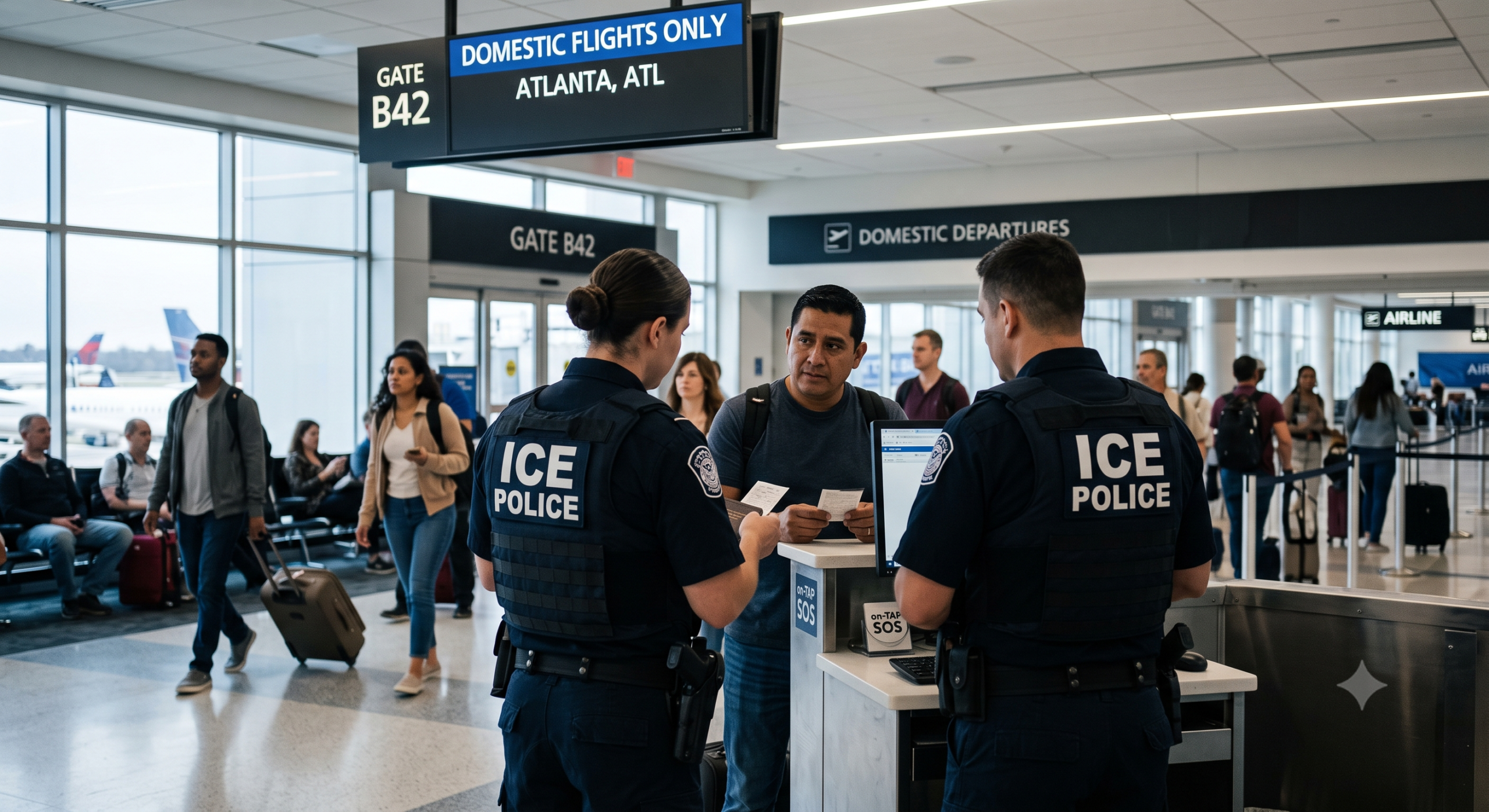
Recent reports from civil rights advocates and news outlets confirm a concerning trend for immigrant communities across the country: ICE agents are increasingly conducting enforcement operations inside domestic airports.
Historically, many travelers assumed that immigration checks were restricted to international arrivals managed by U.S. Customs and Border Protection (CBP). Today, however, ICE is actively intercepting travelers on routine, internal domestic flights—often right at the gate or baggage claim.
At Cohen, Tucker + Ades, we believe that understanding why this is happening and knowing your constitutional rights is your best defense.
To understand why airport enforcement is rising, it helps to look at broader policy shifts within federal immigration enforcement. Reports indicate that ICE leadership and federal officials have set an ambitious enforcement baseline of roughly 2,000 arrests per day nationwide.
When field offices face high daily targets, agents naturally rely on centralized data nodes that allow them to locate noncitizens efficiently. Domestic airports provide just that.
By cross-referencing flight records, passenger manifests, and government identity databases, enforcement agencies can pinpoint exact travel dates, flight numbers, and gate locations—turning routine airport checks into low-effort, high-yield enforcement sites.
Domestic flights inside the U.S. do not cross international borders, but federal agencies share extensive operational data. The TSA routinely collects passenger information through its Secure Flight program to conduct safety screenings. Under inter-agency data agreements, this passenger manifest information can be accessed by federal immigration authorities.
When a noncitizen purchases a ticket using a foreign passport, consular ID, or state identity document, ICE systems can be alerted to their itinerary. Officers are then deployed directly to departure or arrival gates to intercept targeted individuals.
While individuals with prior deportation orders or criminal convictions have always faced heightened scrutiny, the push to meet daily volume targets means that individuals with lower-level civil immigration issues are also being detained.
Alert for Noncitizens: Recent airport detentions have included individuals who overstayed temporary visas, those with pending affirmative applications (such as asylum or adjustment of status), and people with open cases in immigration court.
| Risk Level | Immigration / Legal Status Profile | Key Considerations |
| High Risk | Undocumented / Overstayed Visa | Direct targeting via passenger manifests; high probability of detention. |
| High Risk | Final Order of Removal or Prior Deportation | Outstanding administrative warrants make airport interception highly likely. |
| Moderate to High Risk | Pending Court Case or Pending USCIS Application | Lack of finalized lawful status still exposes travelers to questioning. |
| Low Risk | Lawful Permanent Residents (Green Card Holders) | Generally safe for domestic travel, provided there are no past criminal convictions. |
| No Risk | Naturalized or Native-Born U.S. Citizens | U.S. citizenship provides complete protection against immigration detention. |
Even in a high-security setting like an airport, the U.S. Constitution guarantees core rights to every person on American soil, regardless of immigration status.
You are not required to answer questions about your place of birth, citizenship, or how you entered the country. You can clearly state:
“I am choosing to remain silent, and I would like to speak to an attorney.”
TSA officers may search your carry-on luggage for aviation security. However, ICE agents cannot search your personal belongings or search your cell phone without a judicial warrant or your explicit consent. Do not consent to arbitrary device searches.
If ICE detains you, ask to contact your attorney immediately. Do not sign any documents—especially forms agreeing to voluntary departure—without having an immigration attorney review them first.
If you or a family member must travel domestically, taking these precautionary steps can reduce your risk:
Consult an Attorney First: Have a qualified lawyer review your complete immigration file to identify potential red flags before you purchase tickets.
Keep Legal Contacts Handy: Write down your immigration attorney’s phone number on a physical card in your wallet.
Designate an Emergency Contact: Ensure a family member has your flight details, your attorney’s contact info, and instructions on who to call if you are delayed at the airport.
Explore Alternative Travel Methods: For noncitizens without permanent legal status, traveling by private car or ground transportation carries far less exposure to automated manifest tracking than commercial aviation.
Yes. ICE officers have legal authority to operate in public transit facilities and terminals across the U.S. They regularly monitor domestic passenger lists to locate individuals subject to immigration enforcement.
Yes. Federal data-sharing protocols allow passenger manifest information submitted during check-in to be accessed by immigration enforcement agencies.
While DHS official statements maintain that the agency does not operate on strict formal quotas, internal reporting and news sources consistently confirm that ICE offices are under strong directive pressure to reach high daily arrest volumes—frequently cited around 2,000 arrests per day nationwide.
Stay calm, clearly assert your right to remain silent, and request to speak with your lawyer immediately. Do not run, resist, or present fraudulent identification documents.
In an environment of aggressive immigration enforcement, having an experienced legal team in your corner is essential. If you have questions about domestic travel risks or are facing immigration court proceedings, the attorneys at Cohen, Tucker + Ades P.C. are ready to assist.
Contact Cohen, Tucker + Ades today to schedule a confidential legal consultation before your next trip.