Immigration Law Blog
Stay up-to-date on the latest immigration law news, with the Cohen, Tucker & Ades team's insights behind the headlines

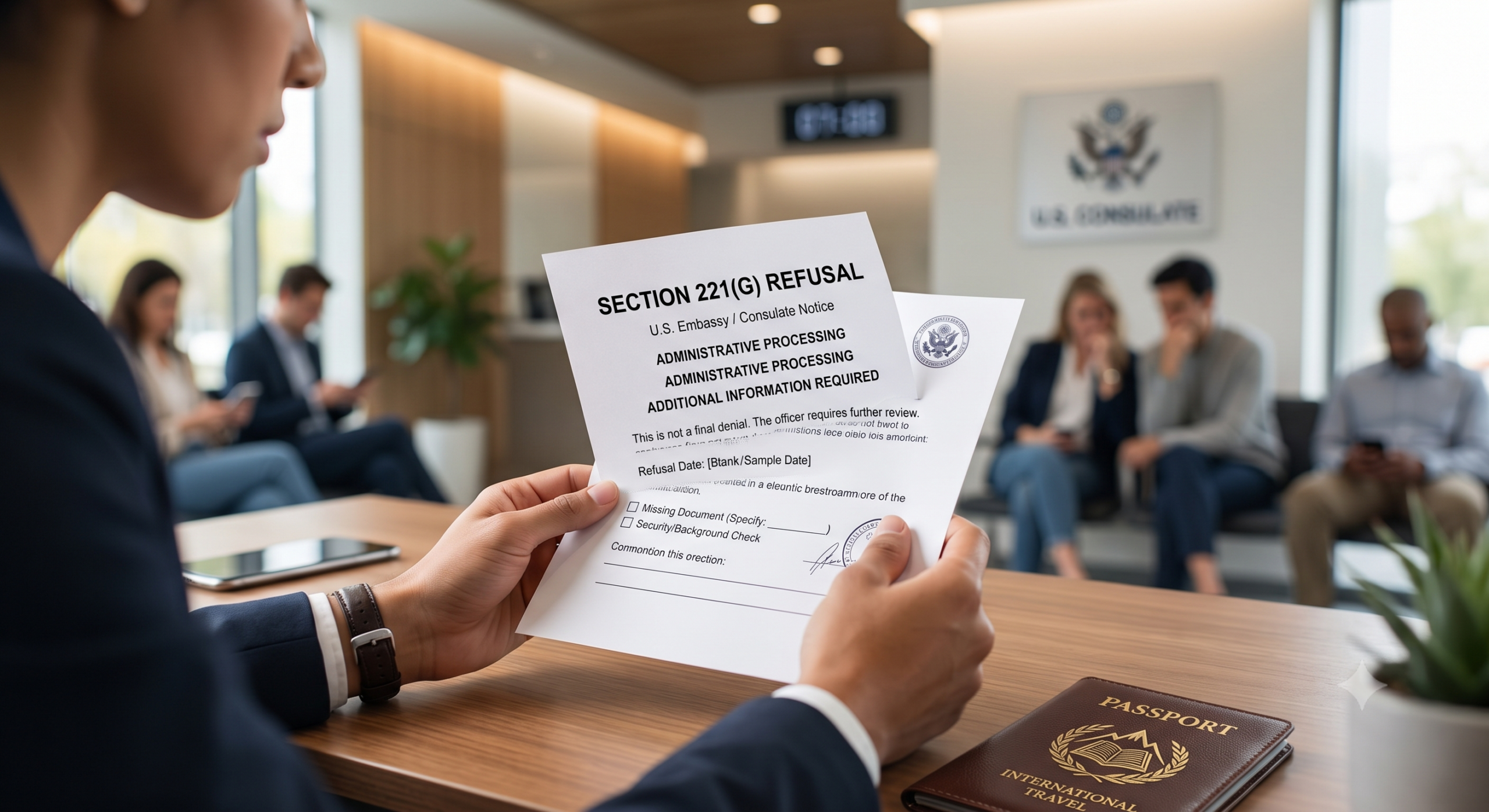
If you walked out of your U.S. visa interview holding a refusal slip citing Section 221(g) of the Immigration and Nationality Act (INA), your first reaction was likely panic. Seeing the word “Refused” on your Consular Electronic Application Center (CEAC) status page can feel like the end of your American dream.
Here is the short answer: A Section 221(g) refusal is usually not a final denial. It is a legal pause indicating that the consular officer needs additional information or background verification before making a final decision on your visa.
Refusal vs. Denial: Section 221(g) is a statutory classification meaning your application is incomplete or placed on hold. Most 221(g) cases are eventually resolved.
Two Main Causes: Requests for missing documents or background security checks (“administrative processing”).
Strict Timeline: You typically have 12 months from the refusal date to submit requested documents without paying a new application fee.
Accuracy Is Critical: Partial or improper document submissions can reset your wait time or lead to a permanent visa refusal.
Under U.S. law, a consular officer must issue or refuse a visa at the end of the interview. If the officer cannot make a final determination immediately, the law forces them to mark the file as “refused” under Section 221(g) while processing continues.
In practice, a 221(g) notice (often handed out on a white, yellow, green, or blue slip) places your application into one of two categories:
The officer determined that a necessary document was missing, expired, or insufficient. Common requests include:
Updated financial sponsorship forms (such as Form I-864 or job offer letters).
Missing civil certificates (birth, marriage, or police clearance certificates).
Tax returns or employment verification documents.
If no documents were requested but your case was still placed on hold, your file is undergoing administrative processing. This occurs when interagency security clearances or database verifications are required. Common triggers include:
Common Names: Your name matches someone listed in a government watchlist database.
Sensitive Technology Fields (TAL): Work in scientific or technological fields subject to Technology Alert List scrutiny.
Travel History: Extensive travel to specific high-scrutiny regions.
Processing times vary significantly depending on the underlying reason for the hold:
| 221(g) Category | Typical Resolution Timeframe |
| Document Submission | 2 to 6 weeks after documents are received by the post |
| Routine Security Check | 30 to 90 days |
| Complex Interagency Review | Several months to over a year |
Crucial Warning: Under INA § 203(g), if you fail to submit requested documents within one year of receiving a 221(g) refusal, your visa application may be formally terminated.
If you receive a 221(g) notice, following the right procedure is key to avoiding further delays:
Follow Instructions to the Letter: Submit exact items requested using the specified delivery method (e.g., direct email upload, designated courier, or online portal).
Submit Everything at Once: Avoid piecemeal responses. Sending partial evidence can cause your case file to sit idle until complete.
Keep Proof of Delivery: Save digital receipts, courier tracking numbers, and email copies.
Monitor Your CEAC Status: Track your status online via the U.S. Department of State’s CEAC portal.
Know When to Seek Legal Help: If your application remains stuck in administrative processing for more than 60–90 days without explanation, an experienced immigration attorney can help submit formal inquiries or evaluate legal remedies like a Writ of Mandamus.
Technically, yes. When filling out future visa applications or ESTA registrations that ask if you have ever been refused a U.S. visa, you must disclose a 221(g) refusal. However, once your visa is issued following administrative processing, you can clarify that the hold was successfully resolved.
Consulates rarely expedite administrative processing because security clearances depend on partner agencies in Washington, D.C. Expedited requests are only considered under rare circumstances, such as severe medical emergencies or urgent U.S. national security interests.
If the consular officer believes the original petition (such as an H-1B, L-1, or I-130) should not have been approved by USCIS, they may return it with a recommendation for revocation. If this happens, your case will experience significant delays while USCIS reviews the file. Legal representation is strongly recommended in these scenarios.
At Cohen, Tucker + Ades, P.C., our NYC-based legal team has guided individuals, families, and businesses through complex consular processing issues since 1964. A Section 221(g) refusal can disrupt your career, travel, or family plans—but you do not have to navigate the embassy labyrinth alone.
Stuck in administrative processing? Contact our experienced immigration attorneys today to discuss your case and learn how we can help protect your immigration goals.